
Do You Need a Permit to Replace a Sewer Line? A Township-by-Township Guide for PA, DE, NJ and MD
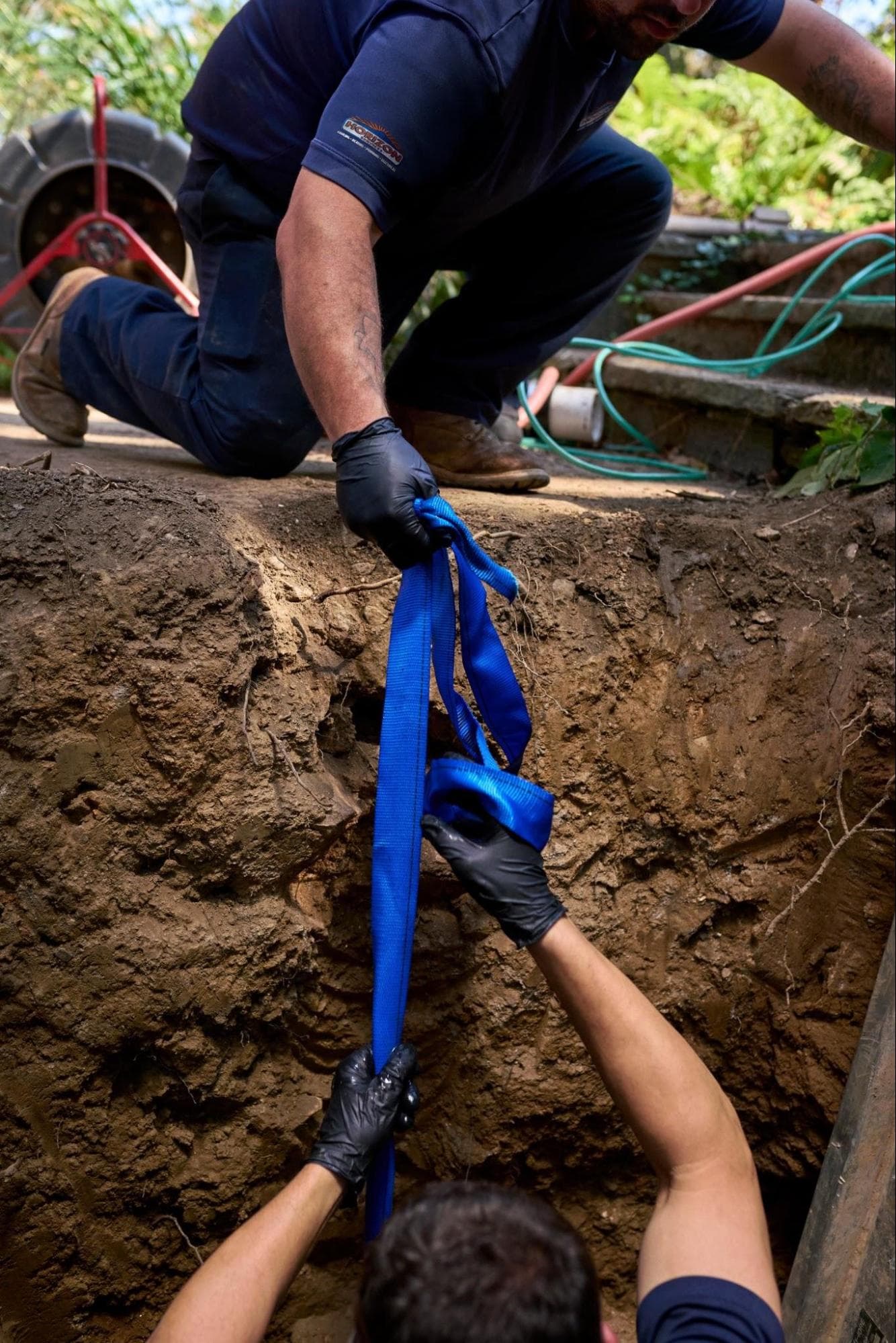
Almost always yes. Replacing a sewer lateral is regulated plumbing work in Pennsylvania, Delaware, New Jersey and Maryland, and it usually requires an inspection before the trench is backfilled. What varies is who issues the permit. It is your municipality, county or sewer authority, not the state, and in Pennsylvania which office handles it depends on whether your municipality administers the Uniform Construction Code.
On this page:
The short version, state by state
Pennsylvania, including Philadelphia
Delaware, New Jersey and Maryland
Three permits people forget
How to find out in one phone call
What happens if you skip it
FAQs
Search this question and you get two kinds of answer, neither of which helps you.
Government sites explain how to apply for a permit in beautiful detail and never tell you whether your specific job needs one. Contractor blogs make confident statewide declarations and link to nothing you can check.
Here is the version with both halves. Where a rule is set locally rather than by the state, we say so, because pretending otherwise is how homeowners end up calling the wrong office.
The Short Version, State by State
State | Who sets the rule | Who issues the permit | Usually also required |
Pennsylvania | Statewide code (UCC), but administration is municipal opt-in | Your municipality's code office, or a certified third-party agency where the municipality opted out. Philadelphia runs its own system | A separate sewer authority approval, and a street opening permit if you dig in the road |
Delaware | County and municipal codes. No single statewide residential permit office | Your county (New Castle, Kent, Sussex) or your city or town | Licensed plumber, and inspection or certification of underground work |
New Jersey | Statewide Uniform Construction Code, applied uniformly | Your municipal construction office, plumbing subcode | Inspection before backfill; sewer authority approval where one exists |
Maryland | Statewide building standards, adopted and enforced locally | Your county or municipal permits office | Licensed master plumber, rough inspection before covering, final inspection |
Pennsylvania
Pennsylvania is the state where the confident blog answers go wrong, and the reason is worth understanding.
The Pennsylvania Uniform Construction Code is a statewide code. Its administration and enforcement, however, are not. Municipalities elect whether to administer and enforce the UCC themselves, and according to the Pennsylvania Department of Labor and Industry, over ninety percent of the state's 2,562 municipalities have elected to do so, either through their own staff or through certified third-party agencies they retain.
That leaves a real minority that opted out. In those municipalities, the Department handles commercial enforcement, and residential requirements are enforced by certified third-party agencies hired by the property owner or their contractor.
So the honest Pennsylvania answer is this: the code applies to your job wherever you live, but who you get the permit from depends on your township or borough. Call the local code office first. If your municipality tells you it does not administer the UCC, ask which certified third-party agency it works with.
The Sewer Authority Is a Separate Office
A building or plumbing permit is not the only approval on a lateral job. Connecting to, replacing or altering a lateral that serves a public sewer is generally governed by the municipal authority or sewer authority under its own ordinance, independently of the construction code.
In much of Chester, Delaware and Bucks counties that authority is a separate entity from the township, with its own application, its own inspector and its own hours. Ask about it explicitly, because it will not come up on its own.
Philadelphia
Philadelphia runs its own code and its own water department process, so treat it as its own jurisdiction rather than as a Pennsylvania township.
The Philadelphia Water Department requires a Sewer Connection Permit for installing or repairing a sewer lateral, and a Registered Plumber must obtain it. Work that opens the street needs separate lane closure permits through the Streets Department, and the plumber has to verify street opening and backfill requirements with the relevant Highway District. The city's process for the plumbing permit itself is documented at phila.gov.
In practice this means a Philadelphia lateral replacement is a multi-permit job coordinated by a licensed plumber, and a homeowner cannot pull it themselves.
Delaware
Delaware has no single statewide residential permit authority, so the answer comes from your county or your municipality.
For most of Horizon's Delaware customers that means New Castle County. The county has a permit path specifically for water and sewer lateral work under the 2021 International Plumbing Code, and its self-certification process lets a licensed contractor certify items like depth, materials, separation distances and cleanout placement, while the county reserves the right to inspect the work itself. Start at New Castle County's permit guide and permits and inspections page.
If you are inside Wilmington, Newark or another incorporated municipality, check with the city as well as the county, because the city may be the issuing authority for your address.
One Delaware-specific detail worth knowing: the state licenses plumbers through the Division of Public Health rather than through a trade board. If you are verifying a contractor's license, that is where to look.
New Jersey
New Jersey is the one state here with a clean statewide answer.
The New Jersey Uniform Construction Code applies uniformly across the state and is enforced by your municipal construction office. Sewer lateral replacement is plumbing work, and it needs a plumbing subcode permit. There is no township lottery.
What does vary is the classification of the work, and it answers the objection homeowners always raise, which is “but it's only a repair.”
Ordinary maintenance requires no permit and no notice. Clearing a stoppage is maintenance.
Minor work does require a permit, and includes replacing existing plumbing piping with new approved material of like capacity. Replacing your lateral sits here.
The useful wrinkle is that for minor work, the job may proceed on notice to the enforcing agency before the permit physically issues. That is why a South Jersey contractor can often start sooner than you expect without cutting any corners.
Maryland
Maryland adopts statewide building standards and then enforces them locally, so the permit comes from your county or municipality.
In Cecil County, the part of Maryland closest to Horizon's footprint, no plumbing work may commence until a permit has been issued to a licensed master plumber. There is a rough inspection before any underground installation is covered, a final inspection at completion, and 24 hours' notice is required to schedule an inspection. Connections to municipal water or sewer require inspection by the Department of Public Works or the relevant municipality before covering. See Cecil County plumbing permits and required inspections.
The before-backfill inspection is the detail that shapes your schedule. The trench stays open until someone with a clipboard has looked at it.
Three Permits People Forget
Most homeowners assume there is one permit. On a lateral job there are frequently three.
The Sewer Authority's Own Approval
Where a separate municipal authority owns the sewer main, its connection approval is distinct from the construction permit and is issued by a different office on a different timeline.
The Street Opening Permit
If the dig crosses the sidewalk, the curb strip or the cartway, you need a road opening or street cut permit from whoever owns that road. If it is a state route, that is the state transportation department rather than your township, and the restoration requirements are stricter.
The Septic Path
If your home is on an on-lot septic system rather than a public sewer, you are in a different approval process entirely, administered by state or county environmental health rather than by the code office. Call them directly. The rules for a septic system replacement have almost nothing in common with the rules for a lateral.
How to Find Out in One Phone Call
This is the part no government website provides, and it takes about six minutes.
Call your municipality's building, code or permits office. In an unincorporated area, call the county equivalent. Ask for the plumbing inspector or the permit technician.
Then ask these four questions, in this order:
“I'm replacing the sewer lateral from my house to the main. Does that need a permit in this municipality?” Name the job in those terms. It is the phrase they use.
“Does a licensed contractor have to pull it, or can a homeowner?”
“Which inspections are required, and at what stage? Is there one before backfill?”
“Is there a separate sewer authority approval or street opening permit for this address?”
Write down the name of the person who answered and the date. If a question comes up later, at resale or with an insurer, that note is the difference between a conversation and an argument.
Or skip the call. Horizon confirms the requirement with your jurisdiction and handles the permit and the inspection scheduling as part of the job. See sewer line replacement or call 1-800-642-4419.
What Happens If You Skip It
The consequences are rarely immediate, which is exactly why unpermitted sewer work is common. They arrive later, and they arrive at bad moments.
Unpermitted work surfaces at resale, when a buyer's attorney or the municipality asks for the permit history on a property and there is a gap where a major excavation should be.
After a loss, an insurer may ask for documentation of the repair. A permit and a signed inspection are that documentation. A receipt is not.
And a jurisdiction can require that buried work be exposed for inspection after the fact. That is the one that stings, because it means reopening a trench through a lawn, a driveway or a finished basement floor that has already been restored once.
Related Questions on the Same Job
Pipe Bursting or Pipe Lining
Lining restores a pipe that is cracked, leaking or root-infiltrated but still holds its shape, by curing a jointless liner inside it. Bursting replaces a pipe that has failed or is undersized, by fracturing the old one outward and towing new pipe into the space.
Lining is less disruptive. Bursting gives you a genuinely new pipe and can increase diameter. The sewer line camera inspection decides which one your line qualifies for, not a preference. Both usually still require a permit, because the scope of work is a lateral replacement regardless of how much of the yard stays intact. More on trenchless sewer line repair.
Sewer Scope Before You Buy
Get one, particularly on any house built before 1980. A standard home inspection does not include the sewer lateral, and in Wilmington, Newark and the older boroughs of Chester, Delaware and Bucks counties, clay and cast iron laterals are common enough that the inspection pays for itself in negotiating position.
Insurance and Documentation
Coverage for a collapsed sewer line is the exception rather than the rule, because standard policies generally exclude wear, deterioration and the buried service line itself. Sewer backup coverage is normally a separate endorsement that has to be added before the loss.
The part we can help with is documentation: photographs, a written technician report, and the permit and inspection record, all captured before any pipe is removed. See making sure you are covered for sewer backups.
Sewage Backing Up Right Now
Permits are a next-week problem. A basement backup is a today problem. Stop using every drain and fixture in the house, keep people and pets out of the area, and call 24/7 emergency plumbing service. Do not pour chemicals down a backed-up line; here is why chemical drain cleaners make it worse.
Why Choose Horizon Services for Sewer Line Work
Horizon works across Delaware, southeastern Pennsylvania, South Jersey and parts of Maryland, which means our office deals with four states' worth of permit desks as routine rather than as an exception.
We confirm the requirement with your jurisdiction before the job starts, pull the permit, and schedule the inspections around the excavation so the trench is not sitting open waiting on a phone call.
See drain and sewer services, sewer line repair or the areas we serve. To schedule, call 1-800-642-4419.
Sewer Line Permit FAQs
Do I need a permit to replace my sewer line in Pennsylvania?
Almost always, but the permit is issued locally rather than by the state. Pennsylvania's Uniform Construction Code applies statewide while its administration is municipal, and most but not all municipalities enforce it themselves. Call your township or borough code office first, and ask separately about the sewer authority's own approval.
Do I need a permit to replace a sewer lateral in New Jersey?
Yes. New Jersey's Uniform Construction Code applies statewide and your municipal construction office issues a plumbing subcode permit. Clearing a stoppage is ordinary maintenance and needs nothing, but replacing the pipe is classified as minor work, which still requires a permit even though the job may begin on notice to the enforcing agency.
Who pulls the permit, me or the plumber?
In most jurisdictions here the licensed contractor pulls it, and in some, including Philadelphia and Cecil County, a licensed plumber is the only party who can. A few jurisdictions allow a homeowner permit under conditions. Ask the permit office directly, because the answer changes what you can legally do yourself.
Does a trenchless sewer repair still need a permit?
Usually yes. Permitting follows the scope of work rather than how much digging is involved, so lining or bursting a lateral is generally treated the same as an open-cut replacement. You may avoid a street opening permit if nothing in the roadway is disturbed, which is a real advantage of trenchless methods.
Pipe bursting vs pipe lining for sewer replacement?
Lining restores a pipe that is cracked or root-infiltrated but still holds its shape, by curing a jointless liner inside it. Bursting replaces a failed or undersized pipe by fracturing the old one outward and pulling new pipe through. A camera inspection determines which your line qualifies for, not a preference.
Does homeowners insurance cover a collapsed sewer line?
Usually not by default. Standard policies generally exclude wear, deterioration and the buried service line itself, and sewer backup coverage is typically a separate endorsement that must be added before the loss occurs. Check your policy for service line and water backup endorsements, and document everything before any pipe is removed.
Related Articles
What do you need help with today?
Heating
No heat, strange smells, rising bills? We repair and replace heating systems to keep your home reliably warm.
Air Conditioning
AC blowing warm air? Uneven cooling in your rooms? We fix cooling issues fast and keep your system running smoothly all summer.
Plumbing
Our highly trained plumbers handle it all, from leaky faucets to full system installations and repipes.
Electrical
The smartest team in town. You need repair, installations, wiring, inspections, lighting — you name it.