
Breaker Box Humming, Warm, or Tripping Again? 9 Signs Your Panel Needs Attention
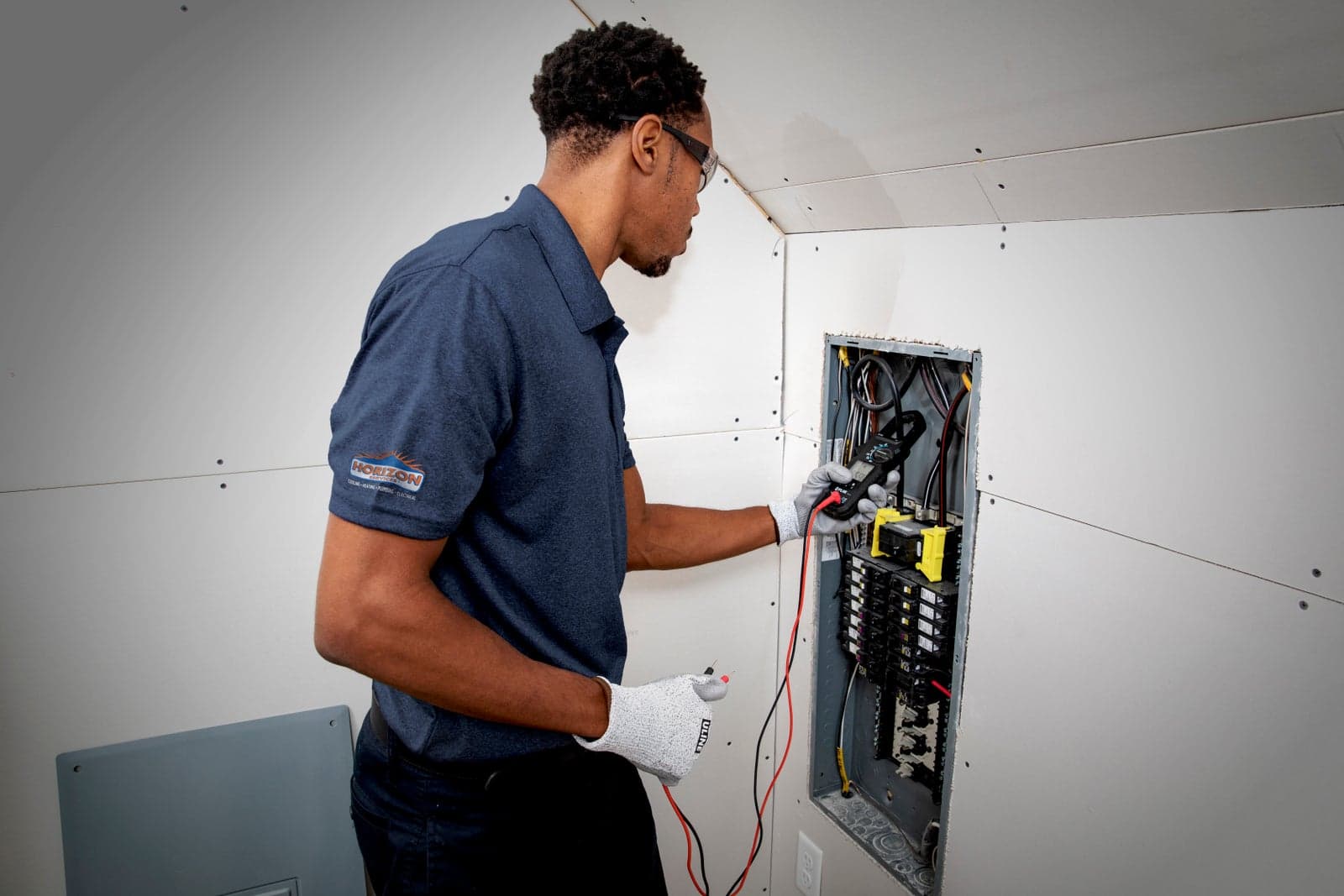
A breaker that trips repeatedly, a panel that hums or feels warm, breakers that feel loose when you reset them, and a box crowded with tandem breakers all point at the same two problems: the panel is carrying more than it was built for, or a connection inside it is failing and heating up. A warm or humming panel is a same-day call. The rest can wait for a scheduled visit, but not indefinitely.
On this page:
Do this right now
Signs your panel is overloaded
Signs a breaker or connection is failing
Symptom, likely cause, what to do
Older panels, fuse boxes and panels with no main
After a lightning storm
FAQs
Most homeowners meet their electrical panel twice: once when something trips, and once when they are told it needs replacing. In between, it spends decades quietly absorbing every appliance, addition and renovation the house has collected.
It usually gives a warning first. Those warnings are just easy to normalize, because a breaker that trips every few weeks starts to feel like a household quirk rather than a message. Here is how to tell which ones can wait.
Do This Right Now
The right first move depends on what you are seeing, so start here before anything else.
If you see smoke or sparks, smell something burning, or see scorching or melted plastic at the panel: get everyone out of the house, call 911 from outside, and do not go back in. An electrician comes after the fire department clears the building, not before.
If the panel hums, buzzes or feels warm to the touch, with no smoke and no burning smell: stop using the circuits on that side of the panel, leave the cover closed, and call a licensed electrician the same day. Humming and warmth almost always mean a connection is loose and heating at the bus or a lug, and loose connections are how panel fires start.
If the damage is outside, at the meter, the service drop or the mast on the wall: call your electric utility, not a contractor. Everything up to and including the meter belongs to the utility, and they will not let anyone else touch it.
If a breaker will not stay reset: leave it off. Resetting a breaker over and over asks a safety device to keep absorbing a fault it was designed to interrupt once.
One rule holds across all four situations. Do not remove the panel cover. The cover is the only thing between you and energized bus bars that stay live even when every breaker is switched off.
Signs Your Panel Is Overloaded
These four are capacity problems. The panel is not broken so much as outnumbered.
Breakers That Trip Under Normal Use
A breaker doing its job once in a while is fine. A breaker that trips whenever two ordinary appliances run together is telling you the circuit is undersized for how the room is actually used.
Kitchens and bathrooms show it first, because that is where high-draw appliances cluster on circuits wired when the house had far fewer of them. If it is always the same appliance, suspect that appliance or its circuit before the panel, and read our post on an oven that keeps tripping its breaker.
A Panel Full of Tandem Breakers
Tandem breakers, sometimes called half-height or twin breakers, fit two circuits into one slot. They are perfectly legitimate where the panel is listed for them.
They are also the clearest visual evidence that the panel ran out of physical room some time ago. Here is the part that gets missed: a tandem adds a slot, not capacity. The bus rating does not change.
A load calculation is what tells you whether you need more capacity or just more space. If it is only space, adding a subpanel is often the simpler answer.
Lights That Dim When Large Loads Start
A brief dip when the air conditioner or the well pump kicks on is normal and expected.
A noticeable dip across the whole house, every time, is not. That pattern points at service capacity or at a connection problem at the main, and it is worth investigating rather than living with.
Power Strips Doing the Job of Circuits
Look at how many rooms in your house run on a power strip because there is nowhere else to plug in. If strips have become permanent wiring, the shortage of circuits is the real issue, and the panel is the constraint behind it.
Signs a Breaker or Connection Is Failing
These are equipment problems rather than capacity problems, and two of them are time-sensitive.
Breakers That Feel Loose or Mushy
A healthy breaker snaps onto the bus firmly and clicks decisively when you switch it. One that feels loose, slides on the stab or goes over without a clean click is not making solid contact.
Poor contact means resistance, and resistance means heat at exactly the spot you cannot see. This shows up on aging panels generally and is a documented characteristic of Federal Pacific Stab-Lok and Zinsco panels specifically.
A Breaker That Trips Immediately After Reset
You can narrow this one down yourself without touching anything inside the panel.
If it trips the instant you reset it with everything on that circuit switched off and unplugged, there is a fault on the circuit, most likely a short or a ground fault. If it holds with the loads off and trips only once appliances start, the circuit is overloaded or a device on it is failing.
A breaker can fail internally and become oversensitive. It is the third suspect, though, not the first, which is the opposite of how most people approach it. Our list of signs the breaker itself needs replacing covers that case.
A Panel That Hums, Buzzes or Feels Warm
This is the one that gets a same-day call.
A panel should be silent and at room temperature. Sound and heat both mean current is meeting resistance somewhere it should not, usually at a lug, a bus stab or a neutral bar that has worked loose over years of thermal cycling.
AFCI Breakers Tripping Repeatedly
Arc fault breakers trip on the electrical signature of arcing, and they genuinely do trip on some motor loads, some LED drivers and some older wiring. "Nuisance trip" is the phrase everyone reaches for.
It is often the wrong one. Shared neutrals, a damaged conductor behind drywall and a loose connection at a receptacle all produce real arcing that an AFCI is correctly detecting. Swapping the breaker on a circuit that is genuinely arcing removes the alarm and leaves the fire risk, so have the circuit tested first.
Scorch Marks, Rust or a Hot Smell
Discoloration around a breaker, rust inside the door, or a faint hot-plastic smell near the panel all mean heat or moisture has been present long enough to leave a mark. Any of the three earns an electrical inspection, with the cover left on.
Symptom, Likely Cause, What to Do
If you only read one part of this page, read this table.
Symptom | Likely cause | What to do |
Panel hums, buzzes or feels warm | Loose connection heating at the bus or a lug | Stop using those circuits, leave the cover on, call an electrician the same day |
Smoke, sparks or a burning smell at the panel | Active fault or arcing | Leave the house, call 911 from outside, do not re-enter |
Breaker trips instantly after reset with nothing on | Short or ground fault on the circuit | Leave it off and call an electrician |
Breaker holds until appliances run | Circuit overloaded or a device failing | Reduce the load, then have the circuit evaluated |
Breakers feel loose when flipped back on | Poor contact with the bus stab | Have the panel inspected, common on Stab-Lok and Zinsco |
Panel full of tandem breakers | The panel ran out of slots years ago | Load calculation to see whether capacity or only space is short |
No main breaker in the panel | Older split-bus design, or disconnect at the meter | Have it evaluated, plan for replacement if the panel is aging |
Still on a fuse box | Obsolete equipment with no AFCI or GFCI protection | Plan a panel replacement |
AFCI breakers keep tripping | Real arcing, a shared neutral, or an oversensitive breaker | Have the circuit tested before replacing the breaker |
Devices died after a lightning storm | Surge on the service or on a data line | Have the panel and grounding checked, then add surge protection |
If your row is the first or second one, do not wait for business hours. Horizon offers emergency electrical service, and you can reach us at 1-800-642-4419.
Older Panels, Fuse Boxes and Panels With No Main
Three older configurations come up constantly, and they deserve different answers.
Federal Pacific Stab-Lok and Zinsco Panels
Both get discussed loudly online, so here is what is actually on the record.
The Consumer Product Safety Commission investigated Federal Pacific Stab-Lok breakers and closed that investigation on March 3, 1983. Its closing statement said the data then available did not establish that the breakers posed a serious risk of injury, while noting that gathering the data needed to settle the question would cost several million dollars the agency was not prepared to commit. That is a stopped investigation, not a clean bill of health, and not a finding of hazard either.
Separately, a 2002 New Jersey consumer fraud judgment found that the manufacturer had issued UL labels on products it knew had not met the testing requirements. Independent bench testing has since reported failure-to-trip rates above what the standard allows. Neither line was ever recalled, and Zinsco's reputation rests on field experience and insurer loss-control guidance rather than a regulator's finding.
Practically: insurers and home inspectors routinely flag both, replacement is the usual remedy, and a loose-feeling breaker in either deserves attention rather than a shrug.
Fuse Boxes
A fuse box still in service works. It also offers no arc fault or ground fault protection, it is easy to defeat by dropping in an oversized fuse, and it is increasingly an obstacle at resale and at insurance renewal. Replacement is the right recommendation, and panel replacement and service upgrades is the service that covers it.
Panels With No Main Breaker
This one is not automatically a defect. Older split-bus panels used several main breakers instead of one, and in some installations the service disconnect lives at the meter outside.
What matters is whether a compliant disconnect exists somewhere and whether the panel is otherwise sound. Have it looked at, and if the panel is aging anyway, fold the fix into a replacement rather than paying to do the work twice.
After a Lightning Storm
When one storm takes out a television, a garage door opener and a handful of smart devices, the surge came in on the service, on a coaxial or data line, or through a difference in ground potential between two paths.
Start by having the panel, the grounding electrode system and the bonding checked. An inadequate ground makes every surge worse, and it is the thing a surge device depends on to work at all.
Then protect in two layers: a whole-home surge protection device at the panel for everything hardwired, and point-of-use protection for electronics that plug in. Check your homeowners policy too, and photograph the damaged devices and model numbers before anything gets thrown out.
What You Can Do and What Needs an Electrician
The safe homeowner list is short, and that is not us being precious about it.
You can reset a tripped breaker once, unplug what was running on that circuit, note which loads were on when it tripped, check whether a GFCI receptacle upstream tripped instead, and read the panel directory on the door.
Leave to a licensed electrician anything involving the panel cover, a lug or neutral bar, a breaker swap, a new circuit, a suspected arcing circuit, grounding and bonding, and any panel or service upgrade. The cover is the line. It stays on, because the bus bars behind it remain energized even with every breaker switched off.
Why Choose Horizon Services for Panel and Breaker Work
Our licensed electricians handle breaker repair and replacement, panel evaluation and load calculations, whole-home surge protection, and full panel replacement across Delaware, southeastern Pennsylvania, South Jersey and parts of Maryland.
If your panel is humming, warm or tripping in a pattern you have started scheduling your life around, call 1-800-642-4419 and we will get someone out to look at it.
Electrical Panel Warning Sign FAQs
What are the signs my electrical panel is overloaded?
The common signs are breakers that trip when two ordinary appliances run together, a panel filled with tandem breakers, lights that dim across the whole house when a large load starts, and rooms running permanently on power strips. Tandem breakers add slots but no bus capacity, so a panel full of them usually means demand outgrew the equipment.
My breaker box hums and feels warm, who should look at it?
Call a licensed electrician the same day, and leave the panel cover closed. Humming and warmth mean a connection is loose and heating at the bus or a lug, which is how panel fires start. If you see smoke, sparks or scorching, leave the house and call 911 from outside instead.
My breaker keeps tripping after reset, is the breaker itself bad?
Usually no. If it trips instantly with everything on the circuit off, there is a short or a ground fault on the circuit. If it holds until appliances run, the circuit is overloaded or a device is failing. A breaker can fail internally and become oversensitive, but that is the third suspect rather than the first.
Why do some breakers feel loose when I flip them back on?
A loose or mushy breaker is not making solid contact with the panel bus, and poor contact generates heat where you cannot see it. A healthy breaker snaps on firmly and clicks decisively. This is common on aging panels and is a documented characteristic of Federal Pacific Stab-Lok and Zinsco panels, which we recommend having evaluated.
Do tandem breakers mean my panel is already maxed out?
They mean the panel ran out of physical slots, which is not the same as running out of capacity. A tandem puts two circuits in one slot and adds nothing to the bus rating. A load calculation is what tells you whether you need a larger service or simply a subpanel for more space.
AFCI breakers keep nuisance tripping, do I need an electrician?
Yes, before assuming the breaker is at fault. Arc fault breakers do trip on some motor loads and LED drivers, but repeated trips are frequently real arcing caused by a shared neutral, a damaged conductor or a loose connection at a device. Have the circuit tested rather than swapping the breaker first.
Related Articles
What do you need help with today?
Heating
No heat, strange smells, rising bills? We repair and replace heating systems to keep your home reliably warm.
Air Conditioning
AC blowing warm air? Uneven cooling in your rooms? We fix cooling issues fast and keep your system running smoothly all summer.
Plumbing
Our highly trained plumbers handle it all, from leaky faucets to full system installations and repipes.
Electrical
The smartest team in town. You need repair, installations, wiring, inspections, lighting — you name it.