
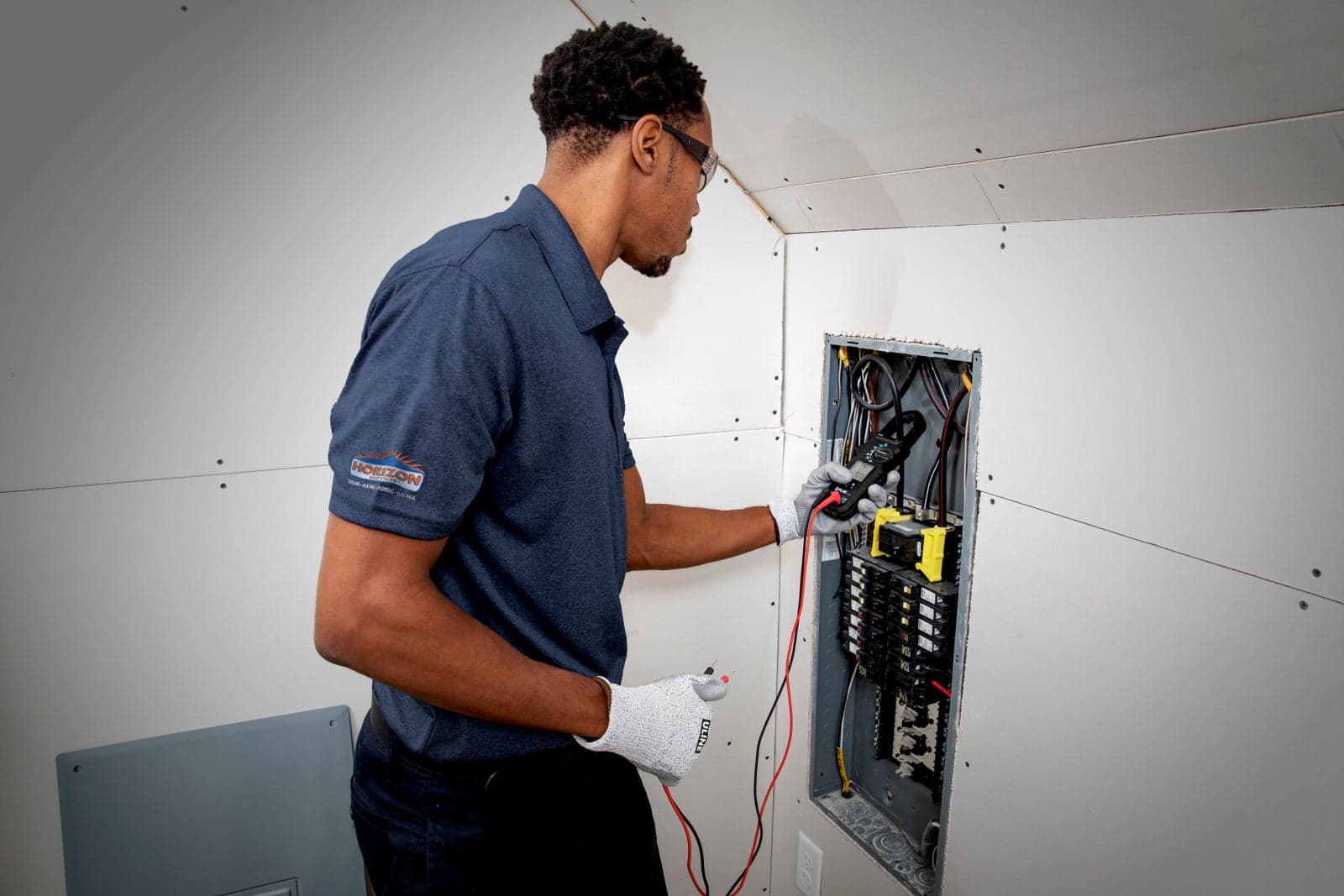
Circuit breakers protect homes by interrupting power during unsafe electrical conditions like overloads or short circuits. When components malfunction, homeowners may experience frequent trips, unusual noises, burning odors, or physical damage. Recognizing these warning signs is critical for electrical safety. While some issues can be diagnosed easily, persistent problems require professional evaluation by a licensed electrician to determine if a breaker, circuit, or appliance is the source of the fault.
On this page:
How Circuit Breakers Work and Why Replacement Matters
10 Warning Signs Your Circuit Breaker May Need Replacement
What to Do If You Suspect a Bad Circuit Breaker
Protect Your Home With Horizon Services
Frequently Asked Questions
Knowing how to recognize signs of a bad circuit breaker or another electrical problem can help you act quickly and safely. In this guide, we'll explain 10 warning signs to watch for, what you can safely check yourself, and when to call a licensed electrician.
From circuit breaker repairs and replacements to electrical panel upgrades Horizon Services provides professional electrical services for homeowners throughout Delaware, Pennsylvania, New Jersey, and Maryland communities.
How Circuit Breakers Work and Why Replacement Matters
A circuit breaker is a safety device designed to interrupt electrical current when a circuit experiences an unsafe condition, such as an overload or short circuit. Specialized GFCI and AFCI breakers provide additional protection against ground and arc faults.
Circuit breakers can wear over time, and their internal components or connections can develop problems. However, a breaker that trips or behaves unexpectedly does not always mean the breaker itself needs to be replaced. The underlying issue could involve the wiring, an outlet, an appliance, or another component of the electrical system.
A professional diagnosis can determine whether the breaker is faulty or another electrical problem is causing the symptoms.
10 Warning Signs Your Circuit Breaker May Need Replacement
Not every breaker trip means the breaker is failing. However, these warning signs indicate that the circuit, breaker, or another part of the electrical system should be evaluated.
1. Frequent unexplained breaker trips
A breaker that trips repeatedly during normal use or shortly after being reset may indicate an overloaded circuit, short circuit, ground fault, faulty appliance, wiring problem, or breaker that is no longer operating properly.
If the breaker continues to trip after you disconnect the connected devices, leave it off until the circuit can be properly evaluated.
2. The breaker won't reset or stay on
A breaker that won't latch, immediately trips again, or has a loose or unusual handle may have a mechanical or electrical problem.
However, a breaker that will not stay on can also be responding correctly to an active fault on the circuit. An electrician should determine the cause before the breaker is replaced.
3. Visible damage or discoloration
Look for signs such as scorching, soot, melted plastic, or dark discoloration around the breaker or electrical panel.
These signs can indicate excessive heat, arcing, or a loose connection. Do not remove the panel cover or attempt to inspect energized components yourself. Contact Horizon’s licensed and trained electricians for a professional electrical evaluation.
4. Burning or smoky odors
A burning, smoky, or unusual chemical odor coming from an electrical panel is a serious warning sign. It can indicate overheating, damaged insulation, loose connections, arcing, or another electrical fault.
Do not ignore a burning smell or continue using the affected circuit. If you see smoke, flames, or signs of an electrical fire, leave the area and call emergency services immediately.
5. Buzzing, crackling, or hissing
A properly operating electrical panel should not produce persistent buzzing, crackling, or hissing sounds.
Unusual sounds can indicate loose connections, arcing, excessive electrical load, or a problem with a breaker or another component. Have the panel inspected by a licensed electrician as soon as possible.
6. The breaker or panel feels unusually warm
A circuit breaker or nearby area of an electrical panel that feels unusually warm during normal operation may indicate an overloaded circuit, loose connection, excessive resistance, or another electrical problem.
Heat should not be ignored, particularly when it occurs alongside discoloration, unusual odors, or repeated breaker trips.
7. The equipment is old, obsolete, or recalled
Age alone does not mean a circuit breaker needs to be replaced. However, very old, obsolete, damaged, or recalled electrical equipment may warrant replacement.
An electrician can identify the panel and breaker manufacturer, evaluate the condition of the equipment, and determine whether replacing an individual breaker or upgrading the electrical panel is the better solution.
8. The breaker has a loose fit or physical damage
A breaker that appears loose, does not sit securely in its position, or has a cracked or broken handle should be professionally inspected.
A loose connection can create resistance and heat, while physical damage can prevent a breaker from operating properly. Do not attempt to reseat or replace the breaker yourself.
9. Lights flicker or power is inconsistent
Flickering or dimming lights, intermittent outlets, or appliances that lose power unexpectedly can indicate an electrical problem.
The breaker may be involved, but the underlying cause could also be a loose connection, overloaded circuit, damaged wiring, faulty outlet, or failing appliance. Professional testing can identify the source.
10. A GFCI or AFCI breaker won't test or reset
GFCI and AFCI breakers provide specialized electrical protection. A breaker that fails its test, won't reset, or repeatedly trips without an identifiable cause should be evaluated by a qualified electrician.
The problem may involve the breaker, wiring, connected equipment, or another fault on the circuit. A defective protective device should not simply be bypassed or replaced with a standard breaker.
Why professional testing matters
Electricians have diagnostic tools and methods that can help identify the source of an electrical problem. Depending on the situation, an electrician may inspect connections, evaluate circuit loads, use thermal imaging to identify abnormal heat, test protective devices, or assess the electrical panel and connected circuits.
These diagnostics help determine whether the appropriate solution is breaker replacement, wiring repair, appliance evaluation, or a larger electrical upgrade.
If you're experiencing these warning signs in your home, Horizon Services provides professional circuit breaker repair and replacement throughout its Mid-Atlantic service area, including Delaware, Pennsylvania, New Jersey, and parts of Maryland.
What to Do If You Suspect a Bad Circuit Breaker
If you suspect a circuit breaker is faulty, taking the right steps can help protect your home and prevent further electrical damage. By performing a few safe preliminary checks, you can gather useful information before deciding whether it is time to call a licensed electrician.
Safe checks for homeowners
You can perform a few basic checks without opening the electrical panel:
Unplug Connected Devices: Disconnect appliances on the affected circuit and attempt a reset once. If it trips immediately, do not force it.
Identify Patterns: Note whether tripping occurs when specific high-draw devices run simultaneously.
Inspect Accessible Equipment: Look for damaged power cords, scorched outlets, or GFCI outlet trips without opening the electrical panel cover.
When to contact a licensed electrician
If you notice persistent trips, burning smells, buzzing sounds, loose switches, or panel warmth, contact Horizon Services immediately. Our licensed electricians provide 24/7 emergency services across Delaware, Pennsylvania, New Jersey, and Maryland.
To help speed up your service call, have the following details ready when scheduling:
Panel details: Brand, amperage, and approximate age of the electrical panel.
Symptoms: Specific noises, odors, or visual damage observed.
Triggers: When the trips occur and which devices were running.
Recent updates: Any newly added high-draw appliances or recent electrical work.
Protect Your Home With Horizon Services
A circuit breaker is an important part of your home's electrical safety system, but a tripped or malfunctioning breaker does not always mean the breaker itself has failed. Frequent trips, unusual heat, buzzing, burning odors, visible damage, flickering lights, and GFCI or AFCI problems can all signal an electrical issue that deserves professional attention.
Horizon Services provides professional electrical services across Delaware, Pennsylvania, New Jersey, and Maryland. From circuit breaker repair and replacement to electrical panel upgrades and whole-home surge protection, Horizon's licensed electricians can diagnose the underlying problem and recommend the appropriate solution.
If you've noticed signs of a failing breaker or another electrical problem, schedule a professional electrical inspection service with Horizon Services to help restore safe, reliable power to your home.
Frequently Asked Questions
How long do circuit breakers typically last?
Circuit breakers can remain in service for many years, but there is no single replacement age that applies to every breaker. Wear, electrical faults, heat, moisture, panel conditions, and manufacturer-specific factors can affect service life. An electrician can inspect an older breaker and determine if replacement is warranted.
Can a circuit breaker fail without tripping?
Yes. A circuit breaker can develop a mechanical, electrical, or connection problem without consistently tripping when expected. Signs such as burning odors, unusual heat, buzzing, discoloration, or unreliable power should be evaluated by a licensed electrician rather than assuming the breaker is functioning properly.
Can a bad circuit breaker damage appliances?
A malfunctioning breaker or another electrical problem can contribute to abnormal voltage, overheating, or repeated power interruptions that may affect connected equipment. If appliances are behaving unusually at the same time you notice breaker or panel problems, stop using the affected circuit and have the electrical system inspected.
Should I replace a circuit breaker with a higher-amp breaker?
No. A breaker should not be replaced with a higher-amperage breaker simply to prevent frequent trips. The breaker protects the wiring from excessive current, so installing one with a higher rating than the circuit is designed to handle can create a serious overheating and fire hazard. A licensed electrician should determine the correct breaker size and whether the circuit needs an upgrade.
What is the difference between a bad breaker and an overloaded circuit?
An overloaded circuit trips because connected devices are drawing more current than the circuit is designed to safely handle. A bad breaker can trip even when the circuit is not overloaded or may fail to operate properly when a fault occurs. Because the symptoms can overlap, repeated trips should be professionally diagnosed rather than assuming the breaker needs replacement.
Related Articles
What do you need help with today?
Heating
No heat, strange smells, rising bills? We repair and replace heating systems to keep your home reliably warm.
Air Conditioning
AC blowing warm air? Uneven cooling in your rooms? We fix cooling issues fast and keep your system running smoothly all summer.
Plumbing
Our highly trained plumbers handle it all, from leaky faucets to full system installations and repipes.
Electrical
The smartest team in town. You need repair, installations, wiring, inspections, lighting — you name it.