
Heat Pump Running Constantly in Winter? 9 Reasons Why (and When It's Actually Normal)
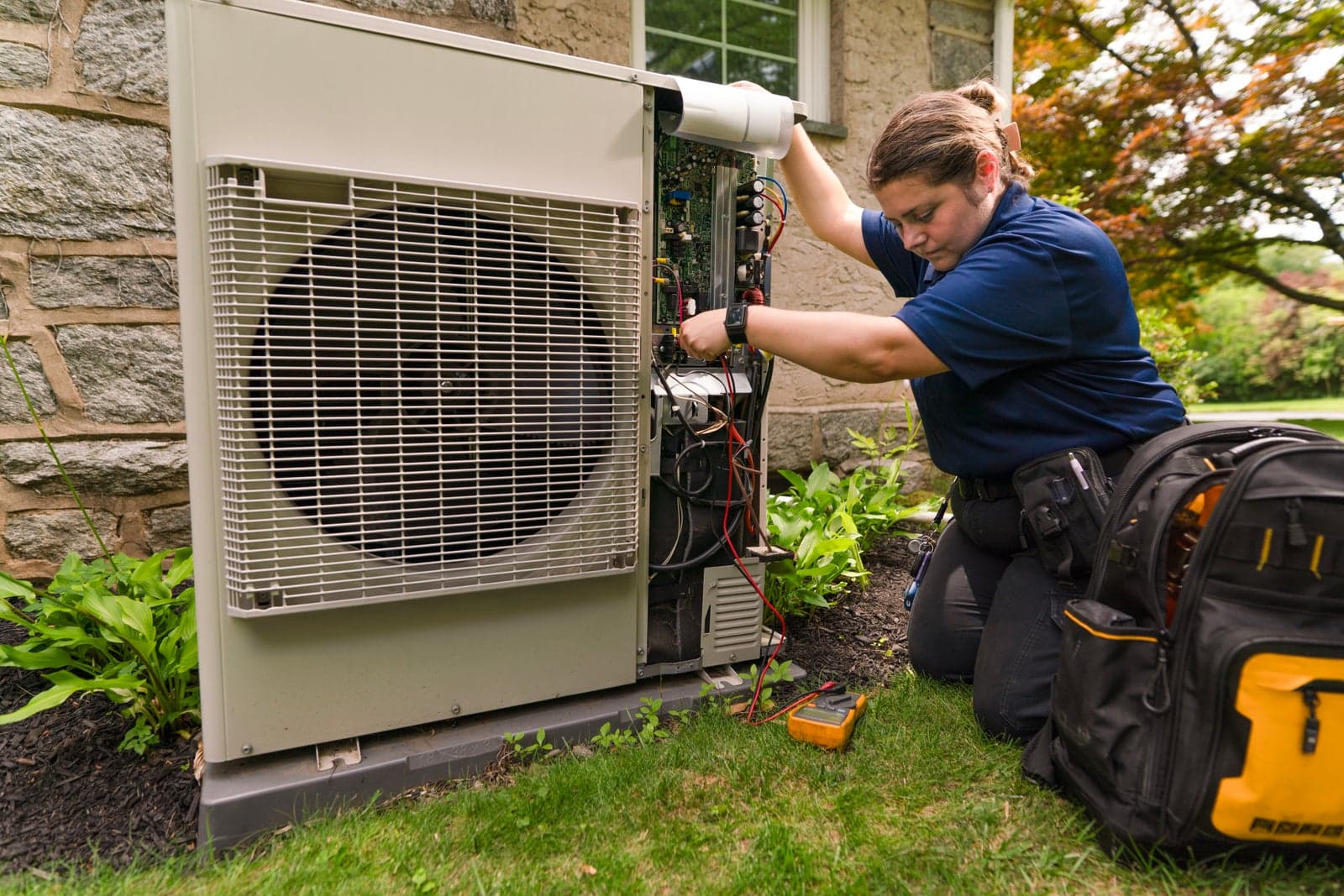
A heat pump that runs continuously in cold weather is usually working exactly as designed. Long, low-speed run cycles are how modern heat pumps deliver heat, and a unit that cycles off on the coldest night of the year is more likely oversized than healthy. The one test that matters is whether your house is holding its setpoint. If it is, this is normal. If it is not, or if auxiliary heat is running alongside it, something is wrong.
DO THIS FIRST: If the outdoor unit is encased in solid ice, if the breaker has tripped more than once, or if you smell anything burning, switch the system to Emergency Heat at the thermostat and call for service. Do not chip, hammer or pour hot water on the ice, and do not keep resetting a breaker that will not stay in.
On this page:
Is it actually a problem? The three-question test
Symptom, likely cause, what to do
The nine reasons, explained
What you can fix and what needs a technician
Repair once more or replace
FAQs
Half the people who search this phrase do not have a broken heat pump. They have a correctly working one and an expectation left over from owning a furnace.
A furnace makes heat, delivers it fast and hot, and shuts off. A heat pump moves heat, delivers it slowly and steadily, and stays on. Those are two different machines behaving correctly, and the second one feels alarming if you have only ever lived with the first.
So before we get to what can go wrong, let us settle whether anything has.
Is It Actually a Problem? The Three-Question Test
Answer these three in order. It takes about thirty seconds.
Is the house holding the temperature you set? Walk to the thermostat and compare the reading to the setpoint.
Is auxiliary or emergency heat showing on the thermostat? Most thermostats display AUX, EM HEAT or a similar indicator when the backup strips are energized.
Does it also run nonstop in mild weather? Think back to a 50-degree day.
Yes, no, no means your heat pump is doing its job. Anything else means it is worth a call.
Why Continuous Running Is Normal
Heat pumps are sized around a winter design temperature, which is roughly the coldest condition your area sees in a typical year. At that temperature the system is meant to run continuously, because continuous operation at low output is more efficient and more comfortable than short bursts at full output.
A heat pump that still cycles on and off during a hard freeze usually indicates an oversized system, which is a comfort problem of its own.
Why the Air Feels Lukewarm
Heat pump supply air typically comes out of the register somewhere around 90 to 110 degrees. A gas furnace delivers roughly 125.
Your skin sits at about 90 degrees. That means correctly heated heat pump air can feel neutral or even cool against your hand while it is heating the house perfectly well, because the difference between the air and your skin is small.
The system compensates by moving more air for longer. Less heat per cubic foot, more cubic feet. That is the trade, and it works. More on the mechanics at how heat pumps work.
Symptom, Likely Cause, What to Do
Symptom | Likely cause | What to do |
Runs nonstop below freezing, house holds setpoint | Normal operation near design temperature | Nothing |
Lukewarm air from the vents in winter | Normal. Supply air is cooler than furnace air | Nothing, unless the house is losing temperature |
Light frost on the outdoor coil | Normal between defrost cycles | Nothing |
Cool air in heating mode | Defrost cycle in progress, or a stuck reversing valve | Wait 10 minutes. Still cool means call |
Runs nonstop in mild weather | Low refrigerant, dirty coil, duct leakage, failing compressor | Change the filter, then call |
Runs nonstop and the house keeps losing ground | Low charge, restricted airflow, undersized system | Call for service |
Outdoor unit iced solid across the coil face | Failed defrost control or sensor, low charge, blocked coil | Switch to Emergency Heat and call. Do not chip the ice |
Auxiliary heat runs constantly | Low charge, failed reversing valve, changeover set too high, undersized system | Call. This is what triples a winter bill |
Loud buzz, fan will not spin | Failed capacitor, seized motor, bad contactor | Shut the system off and call. Do not spin the fan by hand |
Breaker trips on the coldest nights | Backup heat strip load, weak breaker, compressor drawing high amps | Do not repeatedly reset. Call for service |
Flashing error code, unit still running | Fault stored by the control board | Photograph the code and call. It rarely clears itself |
Water inside a mini-split wall head | Blocked condensate drain or a kinked line | Shut that head off and call before it damages the wall |
If your row lands in the call column, Horizon runs 24/7 emergency heating service across Delaware, southeastern Pennsylvania, South Jersey and parts of Maryland. Call 1-800-642-4419.
The Nine Reasons, Explained
Two of these are normal. Seven are not. They are ordered so you check the harmless explanations first.
Normal Operation Near Design Temperature
The most common reason a heat pump runs constantly in January is that January is when it is supposed to. If the house is at setpoint and the backup strips are off, the system is converting electricity into heat at its most efficient operating point. Leave it alone.
A Defrost Cycle in Progress
Every so often in cold, damp weather the system briefly reverses itself to melt frost off the outdoor coil. During those few minutes the indoor air turns cool, the outdoor unit may steam, and it can sound different. It ends on its own. If cool air persists past about ten minutes, it is not defrost.
Low Refrigerant Charge
A heat pump moves heat rather than making it, so an undercharge shows up first on the coldest days, when there is least heat available to move. Low charge also causes coil icing and drives the backup strips on. Refrigerant is not consumed by the system. If it is low, there is a leak, and the leak needs locating rather than topping up.
A Failed Reversing Valve
The reversing valve is the component that turns a cooling system into a heating system by changing which coil absorbs heat and which one releases it. When it sticks, the unit blows cool air in heating mode while every other part appears to run normally. It is not a homeowner repair.
Defrost Control or Sensor Failure
The defrost board decides when to run that melt cycle. When the board or its sensor fails, frost never clears, ice builds until the coil face is sealed, and the system loses its ability to absorb outdoor heat at all. This is the most common reason for a fully iced unit.
Restricted Airflow
A loaded filter, a dirty indoor coil or closed registers all cut airflow, which drops capacity and can freeze the indoor coil. This is the one cause on the list you can often fix in five minutes. See why the filter matters more than people think and our air filters page.
A Blocked or Buried Outdoor Unit
Leaves packed against the coil, drifted snow, a decorative cover left on through winter, or shrubs grown in tight all block the airflow the unit needs to pull heat from outdoor air. Clear at least a couple of feet around it and keep the top unobstructed.
Thermostat Changeover Set Too High
Many thermostats have a balance point or changeover setting that decides at what outdoor temperature the backup heat is allowed to come on. Set too high, the strips engage far earlier than necessary, the compressor gets help it does not need, and the electric bill climbs for no comfort benefit. This one is worth asking about at your next service visit.
A Tired Compressor or an Undersized System
Rising amp draw, longer runtimes, hard starts and gradually falling capacity are how a compressor signals wear before it fails outright. A genuinely undersized system shows the same symptoms from day one rather than developing them, which is why the question “has it always done this?” matters so much to a technician.
What You Can Fix and What Needs a Technician
Do these yourself, safely, before you call. Two of them solve the problem often enough to be worth the ten minutes.
Replace the air filter.
Open every supply and return register in the house.
Clear leaves, snow and drift from around the outdoor unit.
Remove any winter cover left on the unit.
Confirm the thermostat is set to Heat rather than Emergency Heat.
Photograph any error code before it clears itself.
Call a technician for these. None of them are homeowner work and several get more expensive if the system keeps running.
Any refrigerant work at all.
A reversing valve, a defrost board or a defrost sensor.
A capacitor or a contactor.
A breaker that trips more than once.
An iced coil that has not cleared after a full defrost cycle.
A fan that buzzes but will not spin.
Water appearing inside a wall or a mini-split head.
If you need heat tonight while you wait, switching the heat pump to emergency backup walks through it. Expect a higher electric bill for those days, which is why it is a bridge rather than a fix.
Repair Once More or Replace
Use three tests together rather than any one on its own.
Age. A heat pump past twelve years is in replacement territory, not automatically, but as a starting assumption.
Refrigerant type. If the system runs a refrigerant that is being phased down, both parts and charge get harder to source and more expensive every year. That trend does not reverse.
Scope. A failed compressor out of warranty is effectively a system decision rather than a part decision. A new compressor bolted into an aging outdoor unit that is still paired with the original indoor coil rarely returns the efficiency you are paying for.
And to answer the question we get asked most often in a slightly embarrassed voice: a three-year-old heat pump is never too late for service. Nothing is ruined. Book heat pump maintenance and start the habit now.
A twelve-year-old unit that is struggling deserves a written comparison before you spend again. Our post on repair or replace covers the same logic for cooling equipment.
Why Choose Horizon Services for Heat Pump Repair
Horizon repairs heat pumps across Delaware, southeastern Pennsylvania, South Jersey and parts of Maryland, 24 hours a day, seven days a week.
Ask us for a written repair-versus-replace comparison rather than a verdict over the phone. On a system over ten years old, that document is worth more than the diagnosis itself, because it tells you what the next three winters look like either way.
See heat pump repair, heat pump replacement or ductless mini split systems. To schedule, call 1-800-642-4419.
Heat Pump Running Constantly in Winter FAQs
My heat pump runs nonstop when temps drop below freezing, is that normal?
Continuous running near the winter design temperature is normal and is how a heat pump is meant to work, as long as the house holds its setpoint. It is not normal if the house is losing temperature, if auxiliary heat runs alongside it, or if it also runs nonstop in mild weather.
My heat pump blows lukewarm air in winter, is that normal?
Yes. Heat pump supply air typically runs about 90 to 110 degrees, against roughly 125 from a gas furnace, and your skin sits near 90. Correctly heated air can feel neutral on your hand while heating the house fine. The system moves more air for longer instead of moving hotter air.
Why is my heat pump blowing cool air in heating mode?
Cool air in heating mode usually means the unit is in a defrost cycle or the reversing valve has stuck in the cooling position. Wait ten minutes, because a defrost cycle ends on its own and warm air returns. If the air is still cool after that, the reversing valve or its control needs a technician.
Auxiliary heat keeps running constantly, is my heat pump broken?
Constant auxiliary heat means the heat pump is not carrying the load. Usual causes are low refrigerant charge, a failed reversing valve, a defrost fault, a changeover temperature set too high, or an undersized system. It is the single biggest driver of a shocking winter electric bill and warrants a service call.
Why is my heat pump covered in ice this morning?
Light frost between defrost cycles is normal, but a coil iced solid across its face means the defrost control or sensor has failed, the charge is low, or the coil is blocked. Switch to Emergency Heat and call for service. Never chip, hammer or pour hot water on the ice.
Why does my heat pump trip the breaker on the coldest nights?
The coldest nights are when backup heat strips add their full load, so a marginal breaker, a weak connection or a compressor drawing high amps shows up then and not before. Do not keep resetting it. Repeated trips are a protective device doing its job and need an electrical diagnosis.
Related Articles
What do you need help with today?
Heating
No heat, strange smells, rising bills? We repair and replace heating systems to keep your home reliably warm.
Air Conditioning
AC blowing warm air? Uneven cooling in your rooms? We fix cooling issues fast and keep your system running smoothly all summer.
Plumbing
Our highly trained plumbers handle it all, from leaky faucets to full system installations and repipes.
Electrical
The smartest team in town. You need repair, installations, wiring, inspections, lighting — you name it.