
Thermostat Wiring: Your Complete Guide to Wire Colors, Terminals, and the C Wire
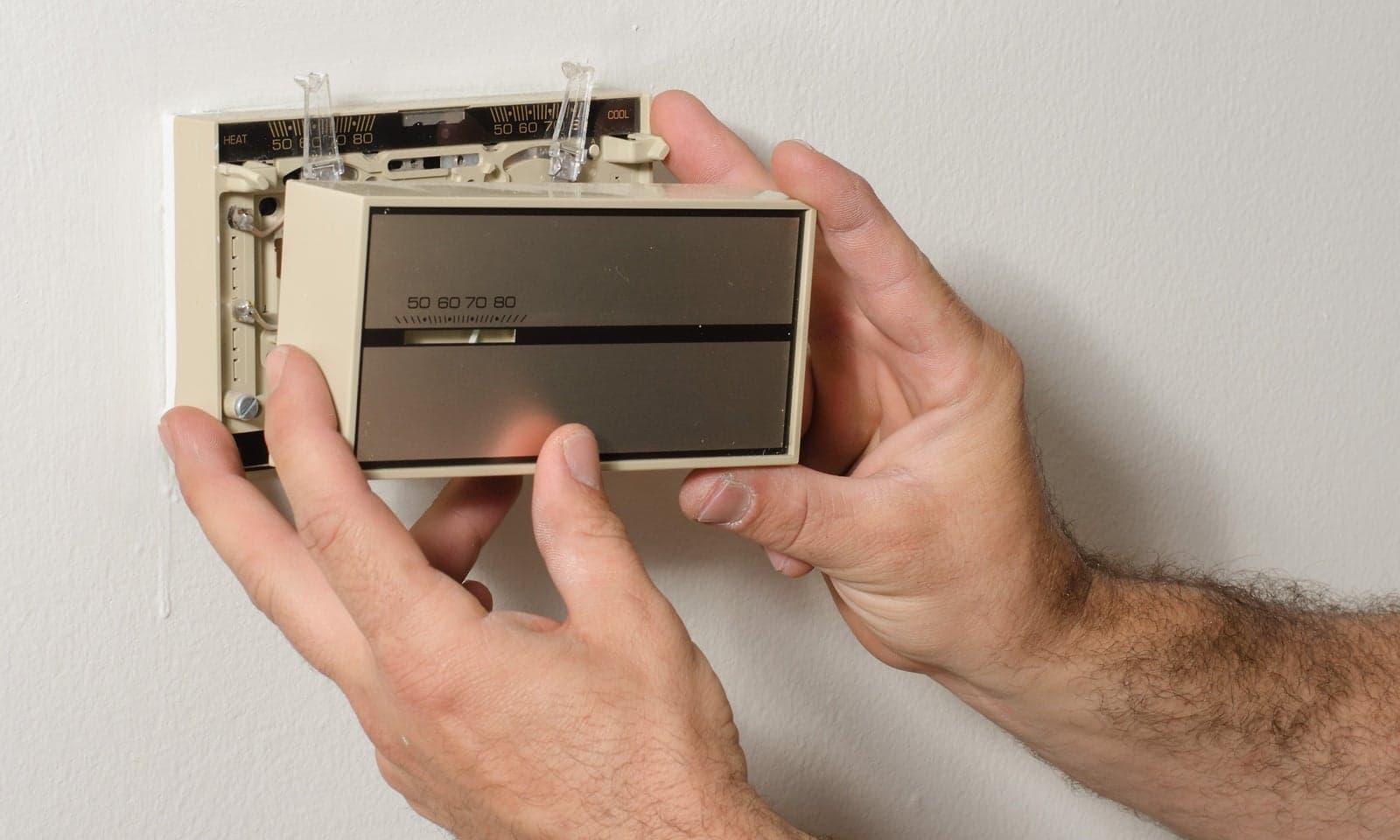
Thermostat wiring follows color conventions: red for power (R), white for heat (W), yellow for cooling (Y), green for the fan (G), and blue or black for the common wire (C). But colors are only conventions — the terminal a wire lands on is the truth, since a previous installer may not have followed the standard. Photograph your wiring before disconnecting anything, and match terminals, not colors, when installing a new thermostat.
On this page:
Wire Colors and What Each Terminal Does
How Many Wires Do You Have?
The C Wire, Properly Explained
Upgrading Your Thermostat: Step by Step
When Wiring Is the Problem
FAQs
Pull an old thermostat off the wall and you'll find a small bundle of colored wires that controls your entire heating and cooling system.
Those wires are simpler than they look, and one caveat governs everything that follows: the colors are a custom, not a law. Whoever wired your system decades ago may have used whatever was on the truck.
Every Wire Color You'll Find on a Thermostat (and the Terminal That Defines It)
Here's the standard map, terminal by terminal:
Usual color | Terminal | What it does |
Red | R / Rc / Rh | 24-volt power from the transformer |
White | W | Calls for heat |
Yellow | Y | Calls for cooling (compressor) |
Green | G | Runs the blower fan |
Blue or black | C | Common wire: completes the circuit for continuous power |
Orange | O | Heat pump reversing valve (cooling-energized) |
Dark blue | B | Heat pump reversing valve (heating-energized) |
Red (R, Rc, Rh). The power feed. Systems with separate heating and cooling transformers split it: Rh powers heat, Rc powers cooling, and a small jumper joins them when one transformer serves both.
White (W). Connect the thermostat's call for heat to the furnace. When W energizes, your furnace begins its ignition sequence.
Yellow (Y). The cooling call, running to the compressor contactor. Two-stage systems add Y2.
Green (G). The fan, independently of heating or cooling, which is what the FAN ON setting uses.
Blue or C. The common wire, covered in depth below, because it's the one that decides whether your smart thermostat installation is a ten-minute job or a project.
Orange and B. Heat pump territory: they control the reversing valve that flips the system between heating and cooling. If your old thermostat used O or B, that fact matters more than any other wire when upgrading.
How Many Wires Do You Have? (What Your Count Means)
2 wires (R + W): heat-only, common with boilers and older furnaces. Simple, but many smart thermostats need more.
3 wires (R + W + G, or R + W + C): heat plus fan control, or heat plus a common wire. Which third wire you have changes your upgrade options, so check the terminal.
4 wires (R + W + Y + G): the classic heat/cool/fan setup in most homes built or updated in recent decades. Everything works except continuous power for a smart thermostat.
5 wires (adds C): the full set. Any modern thermostat installs cleanly.
Heat pump bundles: expect Y, G, R, C plus O or B, and possibly W2/AUX for backup heat strips. Heat pump wiring is where the most expensive miswiring mistakes happen, as covered below.
The C Wire, Properly Explained
Smart thermostats are small computers with screens and radios, and they need continuous 24-volt power, not just the intermittent signals the older wires carry. The C (common) wire completes that always-on circuit.
No C wire? You have three legitimate options:
Check for a spare first. Installers often ran five-conductor cable and folded the unused wire back into the wall. Look behind the thermostat's base plate for a tucked, unconnected wire; if it exists and its far end reaches the furnace control board, connecting both ends turns it into your C wire.
An add-a-wire adapter. A small module at the furnace that lets four wires do five wires' work. Reliable when installed correctly, and installation touches the furnace control board, which puts it at the DIY boundary.
Run new cable. The honest permanent fix: a new 5-conductor (or 8-conductor, for future-proofing) thermostat cable from the air handler to the wall. That's a quick professional visit in most homes.
And the perennial question: the C wire is usually blue or black, but the only way to know is to find the wire landed on the C terminal at the thermostat or the furnace board.
Wall has four wires and the new thermostat wants five? That's a 30-minute problem for our technicians, not a weekend for you — Horizon has served Delaware, Southeastern Pennsylvania, South Jersey, and parts of Maryland since 1987, with upfront pricing and no emergency, holiday, weekend, or after-hours fees. Call 800-642-4419 and we'll have the new thermostat installed and running the same visit.
Upgrade Your Thermostat in 5 Steps (Safely)
1. Kill the power at the source. Not just the thermostat: switch off the furnace/air handler at its service switch or breaker. Thermostat circuits are low-voltage, but the equipment they connect to is not.
2. Photograph, then label. Take a clear photo of every wire on its terminal, then tag each wire with the terminal letter (masking tape works) before disconnecting. Wires love to slip back into the wall; clip a clothespin on the bundle.
3. Remove the old base and mount the new one. Level it, feed the wires through, and anchor to the wall.
4. Land the wires by terminal letter, not color. Your photo is the map. If the old thermostat had anything on O or B, match it exactly on the new one; a heat pump's reversing valve wired backward runs heat when you ask for cooling, and forcing it can strain the compressor.
5. Restore power and test every mode. Heat, cool, and fan, with a few minutes in each. On heat pumps, confirm warm air in heating mode before walking away.
When Wiring Is the Problem (Not the Thermostat)
A few symptoms point past the thermostat to the wires or the equipment side:
Blank display. Dead batteries first, then no power on R/C: a tripped float switch on the condensate line, a blown low-voltage fuse on the furnace board, or a break in the cable.
Fan runs but no heat, or no fan at all. A single call wire (W or G) has lost its connection at one end or the other.
Short cycling right after a DIY install. Usually a loose terminal or a configuration mismatch rather than a bad thermostat.
Where the DIY line sits: swapping a like-for-like thermostat with a photograph and patience is homeowner territory. New cable runs, add-a-wire modules, anything at the furnace control board, and every heat-pump oddity belong with a technician, because mistakes there cost equipment, not just comfort. Our heating services team handles all of it, and fall is exactly the season to sort it before the first cold night.
HVAC Repair & Installation Services From Horizon
Whether you want a smart thermostat installed cleanly, a C wire run properly, or an answer for the mystery wire the last owner left behind, Horizon Services has been the mid-Atlantic's answer since 1987: background-checked technicians, upfront pricing, and 24/7 availability with no after-hours fees.
Call 800-642-4419 or book your thermostat installation online today.
Frequently Asked Questions
What do the thermostat wire colors mean?
By convention: red is 24-volt power (R), white calls for heat (W), yellow for cooling (Y), green runs the fan (G), blue or black is the common wire (C), and orange or dark blue controls a heat pump's reversing valve (O/B). Always confirm against the terminal letters, since installers don't always follow convention.
What color is the C wire on a thermostat?
Usually blue, sometimes black, but the color is only a convention. The reliable answer is whichever wire is landed on the terminal marked C at the thermostat base or the furnace control board. Check both ends before assuming, especially in homes where wiring has been modified over the years.
Can I install a thermostat myself?
A like-for-like replacement is a reasonable DIY job: kill power at the furnace, photograph the wiring, label each wire, and land them by terminal letter. Call a professional for missing C wires, new cable runs, control-board work, or any heat pump with O/B wiring, where mistakes can damage equipment.
What happens if you wire a thermostat wrong?
Consequences range from nothing working to real damage: a blown low-voltage fuse on the furnace board is the common outcome, while a reversed O/B connection on a heat pump runs heating and cooling backward and can strain the compressor. If something behaves oddly after an install, cut power and recheck against your photo.
Do all thermostats need a C wire?
No. Many basic battery-powered thermostats run fine without one. Most smart thermostats need continuous power, so they either require a C wire, ship with an adapter, or use battery-assisted workarounds that can cause odd furnace behavior. For any display-and-Wi-Fi model, a proper C wire is the reliable answer.
How do I add a C wire for a smart thermostat?
Three routes: connect an unused spare conductor if your existing cable has one tucked behind the wall plate, install an add-a-wire adapter at the furnace, or run new five-conductor thermostat cable. The spare-wire check costs nothing; the other two are quick professional visits that end the problem permanently.
Related Articles
What do you need help with today?
Heating
No heat, strange smells, rising bills? We repair and replace heating systems to keep your home reliably warm.
Air Conditioning
AC blowing warm air? Uneven cooling in your rooms? We fix cooling issues fast and keep your system running smoothly all summer.
Plumbing
Our highly trained plumbers handle it all, from leaky faucets to full system installations and repipes.
Electrical
The smartest team in town. You need repair, installations, wiring, inspections, lighting — you name it.