
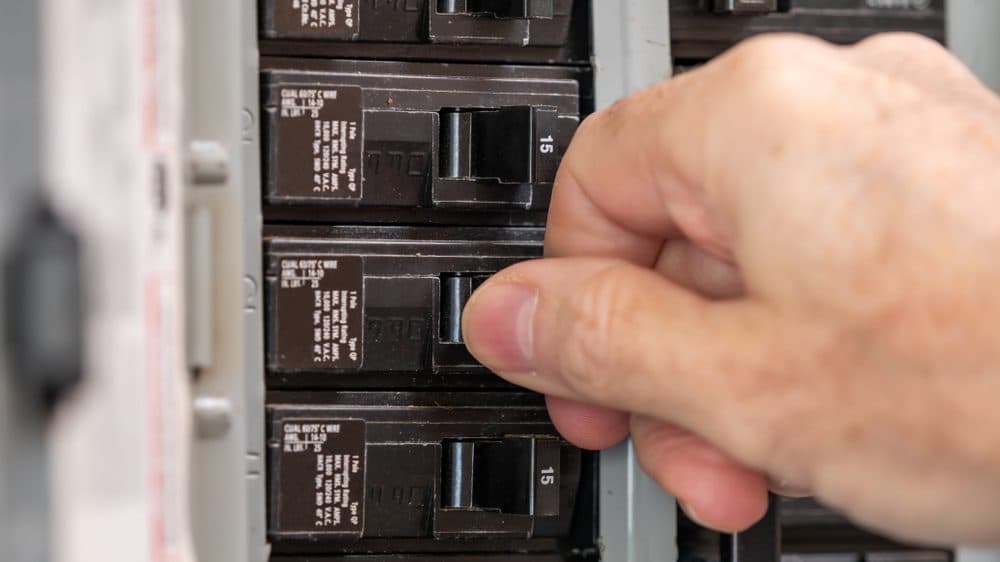
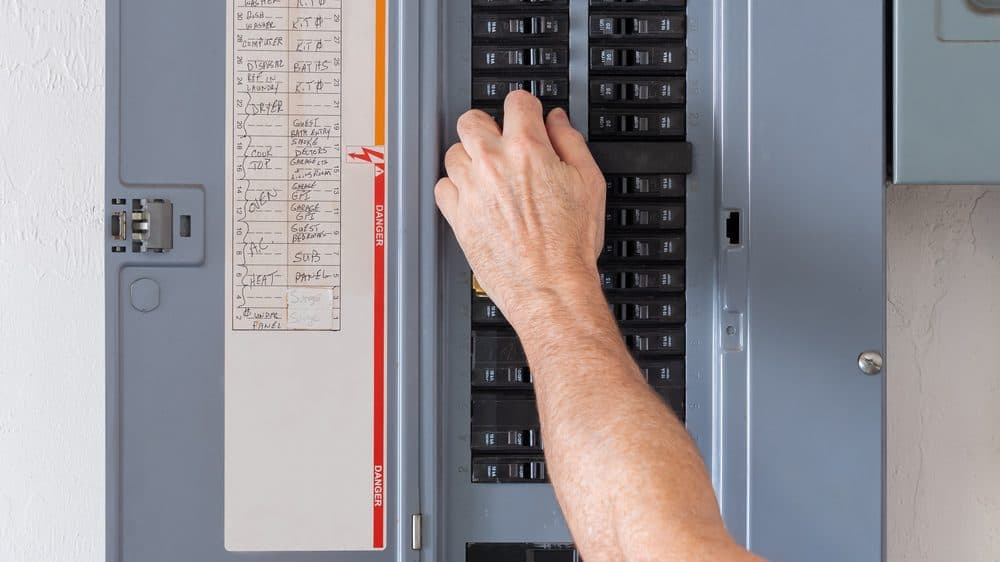
Most 100 amp panels hold 20–24 full-size breakers, and some accept up to 42 circuits using tandem breakers where the panel's label allows them. The label inside the panel door is the real authority: it states the maximum breakers and which slots take tandems. Breaker count and electrical capacity are separate questions, and a load calculation answers the second one.
On this page:
Circuit Breaker Panel Parts
The Real Answer: Check the Label
Tandem Breakers, Explained
How Much Load 100 Amps Handles
Out of Room? Your Three Options
Common Panel Problems
FAQs
Sooner or later, most homeowners end up standing at the electrical panel with a new circuit in mind and a full row of breakers staring back.
The question sounds simple. The useful answer has two halves: how many breakers your panel physically accepts, and how much electricity your 100 amp service can actually deliver. Homes run into both limits, and they're fixed in different ways.
Circuit Breaker Panel Parts
A quick tour of what you're looking at, since the rest of this article refers to these parts. The main breaker sits at the top and rates your whole service: on a 100 amp panel, it reads 100. The branch breakers fill the rows below, each protecting one circuit: narrow single-pole breakers for 120-volt circuits, wide double-pole breakers for 240-volt loads like dryers and AC condensers.
Behind them, bus bars carry power to each breaker, while the neutral and ground bars collect the return and safety wires. The panel label on the inside of the door documents what the manufacturer built the panel to accept, and it's about to become the star of this article.
The Real Answer: Your Panel's Label Decides
A standard 100 amp residential panel typically provides 20 to 24 spaces for full-size breakers, with some models offering as few as 12 or 16.
You'll often read that a 100 amp panel can take "up to 42 breakers." Here's the accurate version: 42 circuits was the long-standing ceiling in the electrical code, and many panels were designed around it. Modern code defers to each panel's listing, meaning the number printed on your panel's label is the binding limit for your equipment: total circuits, and which slots (if any) accept the tandem breakers that squeeze two circuits into one space.
So skip the rules of thumb and open the panel door. The label tells you the panel's maximum circuits, its tandem policy, and settles the first half of the question in about thirty seconds.
Tandem Breakers, Explained
A tandem breaker (also sold as a twin or duplex, and nicknamed a "cheater") puts two independent 120-volt circuits into a single full-size slot. Where the panel's label permits them, tandems are a legitimate, code-compliant way to add a circuit to a full panel.
Two cautions keep tandems honest. First, they only belong in the slots the label designates; a tandem forced into an unlisted panel or slot is a classic home-inspection red flag, and some inspectors will make you correct it at sale time. Second, tandems add circuits, not capacity. If your panel is already working near its electrical limit, doubling up circuits treats the symptom while the real constraint remains.
That's the pivot point of this whole topic, so let's put numbers on it.
How Much Electrical Load Can a 100 Amp Panel Handle?
At 240 volts, a 100 amp service can deliver 24,000 watts. Electricians size continuous loads to 80% of a circuit's rating, and the same discipline applies to thinking about the service: plan around sustained demand of roughly 80 amps, keeping headroom for startup surges and long-running loads.
Now the part that surprises people: add up the handles in a typical full panel and you'll get far more than 100 amps. An AC condenser on a 30–40 amp double-pole, an electric dryer on 30, a range on 40–50, a water heater on 30, plus a dozen 15 and 20 amp branch circuits can total 200+ amps of breaker ratings on a healthy 100 amp service.
That's normal, because breakers rate the wires they protect, not your simultaneous usage, and everything never runs at once. What matters is the load calculation: the standardized math electricians use to convert your square footage, appliances, and HVAC into a realistic demand figure. That calculation, not the slot count, is what says whether your service has room for the hot tub.
One more modern note: AFCI and GFCI breakers, which current code requires on most living-area and wet-location circuits, occupy standard slots but change what the panel protects against. If your panel predates them entirely, that's worth a conversation independent of capacity. Our guide to the signs a circuit breaker needs to be replaced covers the related symptoms.
Out of Room? Your Three Options
1. Tandem breakers, where the label allows them: the quickest path when you're short on slots but have capacity to spare. Best for adding a modest 120-volt circuit or two.
2. A subpanel: a smaller second panel fed from the main one, adding a bank of new slots for a finished basement, garage, or workshop. It expands circuit count without touching your service size; our main panel vs. sub-panel guide explains when it's the right call.
3. A panel and service upgrade to 200 amps: the answer when the load calculation, not the slot count, is what's maxed out. This is increasingly the story in homes adding the big modern loads: an EV charger, a heat pump, an electrified kitchen, a hot tub. A panel upgrade replaces the panel and service equipment and resets both limits at once.
What drives an upgrade's cost isn't a mystery, even though every house prices differently: the new service size, whether the meter and mast need work, permit and inspection requirements in your town, and how many existing circuits migrate to the new panel. Horizon quotes it upfront after a load calculation, so the number arrives before any work does.
Not sure which of the three fits your house? That's a load-calculation call, and it's exactly the math our electricians do every day — Horizon has served Delaware, Southeastern Pennsylvania, South Jersey, and parts of Maryland since 1987, with background-checked electricians, upfront pricing, and no emergency, holiday, weekend, or after-hours fees. Call 800-642-4419 and we'll size it properly.
Common Electrical Panel Problems in Homes
While you have the panel door open, five problems worth knowing about:
Corrosion. Rust or white oxidation on the panel, bus bars, or breakers signals moisture where it doesn't belong, and corroded connections resist current and generate heat.
Double taps. Two wires landed under one breaker's single-wire terminal. It looks tidy and it isn't: connections loosen, arc, and overheat. Note the difference from a listed tandem breaker, which legitimately serves two circuits with proper terminals; a double tap is two wires sharing one terminal never designed for it.
Oversized breakers. A breaker bigger than its wire can safely carry, usually installed to "stop nuisance trips." The wire can then overheat without the breaker ever tripping, which is the exact failure the breaker existed to prevent.
Improper bonding. Grounding and neutral systems connected in ways that defeat the safety design: invisible in daily use, dangerous in a fault.
Bad or missing handle ties. 240-volt circuits need both poles to disconnect together. Missing ties leave half a circuit live when someone thinks it's off.
Any of these findings during a home inspection or a curious Saturday deserves a licensed electrician's attention through our circuit breaker repair and installation service.

Electrical Panel Installation and Repair Services From Horizon
Whether you need one new circuit, a subpanel for the basement project, or a full 200 amp upgrade for the EV in the driveway, Horizon Services has been the mid-Atlantic's answer since 1987: nearly 40 years, 700+ employees, a BBB A+ rating and a BBB Torch Award for Marketplace Ethics.
Every electrician is fully background checked and drug tested, every job is priced upfront, and there are never emergency, holiday, weekend, or after-hours fees, with 24/7 availability across Delaware, Southeastern Pennsylvania, South Jersey, and parts of Maryland. Call 800-642-4419 or book online with Horizon's electrical services today.
Frequently Asked Questions
How many breakers can a 100 amp panel hold?
Most 100 amp panels provide 20–24 full-size breaker spaces, and some accept up to 42 total circuits using tandem breakers in designated slots. The definitive answer is printed on your panel's door label, which lists the maximum circuits and tandem policy the manufacturer designed that panel for.
Can I use tandem breakers to add circuits?
Yes, if your panel's label permits them and only in the slots it designates. Tandems fit two 120-volt circuits into one space, making them the quickest fix for a full panel. They add circuit count, not electrical capacity, so confirm your service has headroom before doubling up.
How much load can a 100 amp panel handle?
A 100 amp, 240-volt service delivers up to 24,000 watts, and good practice plans sustained demand around 80% of that. Total breaker ratings will legitimately exceed 100 amps since everything never runs simultaneously; a standardized load calculation determines what your service realistically supports.
Is 100 amp service enough for a modern home?
For a modest home with gas heating and cooking, often yes. Add central air, electric cooking or laundry, and especially an EV charger or heat pump, and 100 amps runs out of headroom quickly. A load calculation gives the definitive answer, and 200 amps is today's standard for upgrades.
What's the difference between being out of slots and out of capacity?
Out of slots means no physical space for another breaker, solvable with tandems or a subpanel. Out of capacity means your service can't support more demand, and only a service upgrade fixes that. A full panel can have spare capacity, and a half-empty panel can be maxed out.
When should I upgrade to a 200 amp panel?
When the load calculation says your demand is crowding 100 amps, when you're planning an EV charger, heat pump, hot tub, or major addition, or when the existing panel is obsolete, damaged, or out of both slots and capacity. Frequent whole-panel trips and reliance on tandems everywhere are the everyday warning signs.
Related Articles
What do you need help with today?
Heating
No heat, strange smells, rising bills? We repair and replace heating systems to keep your home reliably warm.
Air Conditioning
AC blowing warm air? Uneven cooling in your rooms? We fix cooling issues fast and keep your system running smoothly all summer.
Plumbing
Our highly trained plumbers handle it all, from leaky faucets to full system installations and repipes.
Electrical
The smartest team in town. You need repair, installations, wiring, inspections, lighting — you name it.