Last Updated: August 2026
Tankless water heaters cost more upfront but last 20+ years, heat water only on demand, and never run out of hot water. Traditional tank heaters are cheaper and simpler to install but last 10–15 years, lose energy keeping stored water hot, and can run cold after heavy use. The right choice comes down to your household size, hot-water habits, budget, and how long you plan to stay in your home.
On this page:
Tank vs Tankless at a Glance
The 4 Key Differences
Repair Costs: Which Is Cheaper to Fix?
Cost, Lifespan & Payback
Which Option Is Right for You?
FAQs
If you're shopping for a new water heater, you've probably discovered the debate: stick with the familiar storage tank, or upgrade to a tankless system that promises endless hot water and lower bills? Both approaches heat water reliably — but they do it in fundamentally different ways.
Tank vs Tankless at a Glance
| Tank Water Heater | Tankless Water Heater |
Upfront + installed cost | Lower — typically the budget-friendly option | Higher — often 2–3x a tank installation, especially if venting or gas lines need upgrades (check current local pricing at publish) |
Lifespan | ~10–15 years | ~20+ years with routine maintenance |
Energy efficiency | Loses heat keeping 40–50 gallons hot around the clock ("standby loss") | Heats only on demand — no standby loss; meaningful annual energy savings |
Hot-water supply | Limited to tank capacity; needs recovery time after heavy use | Continuous — but limited per-minute flow rate for simultaneous uses |
Space required | Floor-standing tank roughly five feet tall | Compact wall-mounted unit, about the size of a small suitcase |
Maintenance | Annual flush to control sediment | Periodic descaling, especially in hard-water areas |
Repair cost if something breaks | Generally lower and more straightforward | Generally higher — more complex components |
Leaning toward one option? Want a professional opinion on what your home actually needs? Horizon Services has been sizing, installing, and servicing water heaters across Delaware, Pennsylvania, New Jersey, and Maryland for nearly 40 years, and our water heater services team can recommend the right system for your household and budget — with financing options that make the upfront cost of either choice manageable. Call 800-642-4419 for a straight answer.
What Are the Differences Between Tankless & Tank Hot Water Heaters?
1. Configuration & Operation
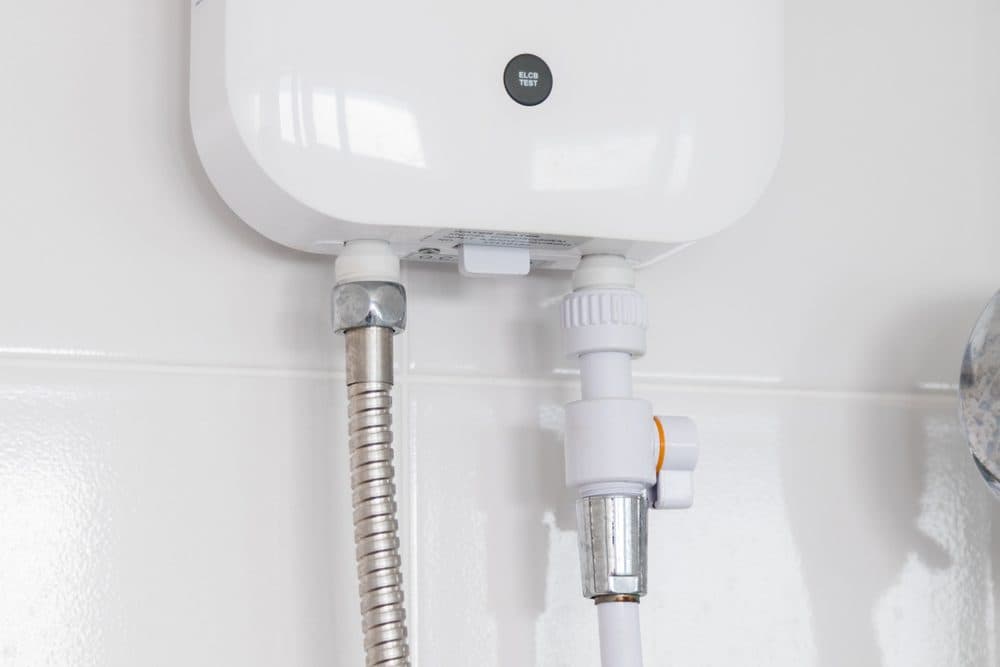
Traditional units are hard to miss: a large storage tank, typically around five feet tall, that heats water continuously so a reserve is always ready, whether you're using it or not. Both come in gas and electric models. Tankless variants take the opposite approach: a compact, wall-mounted unit that occupies minimal space and activates only when you open a hot tap, heating water as it flows through with a gas burner or electric element. No storage, no reserve, and no reheating water you never used.
2. Price. Winner: Tank (Upfront), Tankless (Long-Term)
Tankless systems require a higher initial investment, particularly when installation involves upgrading gas lines or venting to support the unit. But the sticker price isn't the whole story. Because tankless units sip energy only on demand, the monthly utility savings accumulate year after year. Over a 20-year service life, those savings offset a substantial share of the upfront premium. (We break down the payback math below.)
3. Performance. Winner: Tie
Both fuel types deliver reliable hot water flow. Gas tankless models tend to produce higher flow rates; electric tankless models perform best when incoming water is warmer, since they have less heating capacity to raise very cold source water to shower temperature, a real consideration for mid-Atlantic winters. Tank heaters, by contrast, deliver full-temperature water until the tank empties, then make you wait through a recovery cycle.
4. Energy Efficiency. Winner: Tankless
This is the tankless system's signature advantage. Tank systems suffer significant standby energy loss: they burn energy around the clock reheating stored water as it cools, even at 3 a.m. when nobody needs it. Tankless units eliminate that waste entirely through on-demand operation: the burner or element fires only while hot water is actually flowing.
Repair Costs: Which Is Cheaper to Fix?
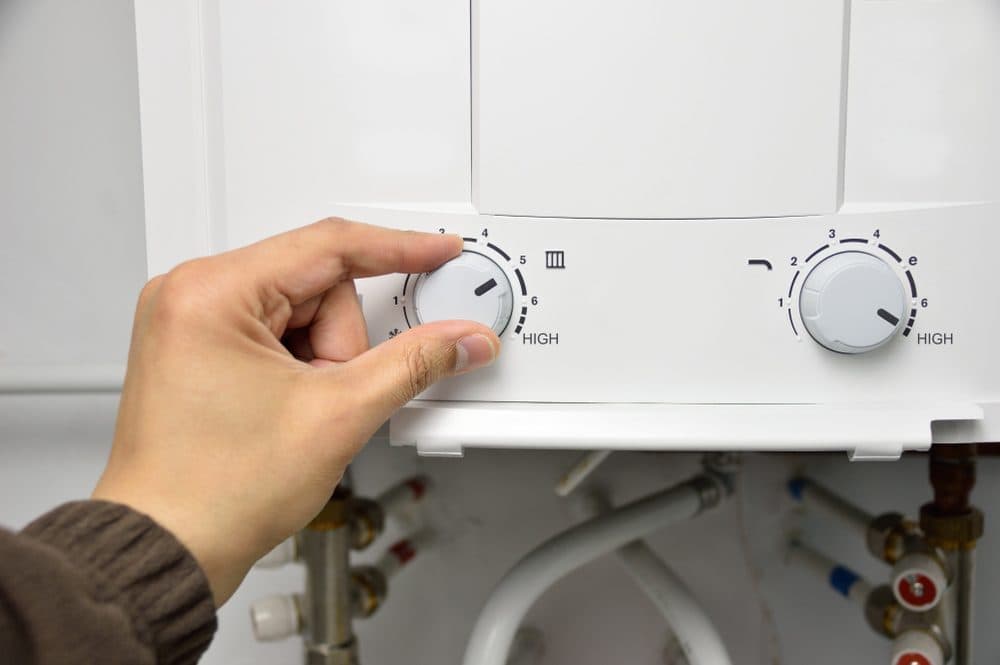
Cost of ownership doesn't stop at installation — it's worth knowing what happens if something goes wrong. Tank water heater repairs tend to be simpler and less expensive: a failed heating element, thermostat, or pilot assembly is a well-understood fix for most licensed plumbers. Tankless units are more complex machines with more components — heat exchangers, flow sensors, and electronic controls — so repairs, when needed, generally cost more and may require a technician with tankless-specific training.
This isn't a reason to avoid tankless — properly maintained units are reliable for their full 20+ year lifespan — but it's a real factor in total cost of ownership worth weighing alongside the energy savings.
Cost, Lifespan & Payback: The Numbers That Decide It
Three numbers do most of the deciding in this comparison:
Upfront cost: a standard tank replacement is the budget option almost everywhere, while a tankless installation typically runs two to three times more once venting and gas-line work are factored in. Have your installer quote both, as prices vary by region and home.
Lifespan: a well-maintained tank lasts roughly 10-15 years; a tankless unit routinely reaches 20 or more, meaning one tankless purchase can outlive two tanks.
Operating cost: because tankless units eliminate standby loss, they use meaningfully less energy for water heating. Gas models generally show the strongest savings, which is why a gas tankless unit typically pays back its premium faster than an electric one.
Run the math over 20 years rather than 20 days: for many households, the more expensive machine is the cheaper decision. And if upfront cost is the sticking point, Horizon's flexible financing options can spread the investment into predictable monthly payments.
Which Option Is Right for You?
The best water heater for your home depends on your budget, household size, hot-water needs, available space, and energy-efficiency priorities.
Choose tankless if: your household regularly runs out of hot water, you plan to stay in your home long enough to bank the energy savings, floor space matters, or you're simply done paying to keep unused water hot. Larger families should size the unit's flow rate carefully — sometimes the right answer is two units.
Choose a tank if: the budget is tight right now, your household is small with modest hot-water demand, you may sell within a few years (making the payback window moot), or your home's gas and venting setup would make tankless installation unusually costly.
Either way, replace proactively. If your current heater is past ten years old, rusting, rumbling, or leaving lukewarm showers, don't wait for the flood: water heater replacement on your schedule always beats replacement on the heater's schedule.
Water Heater Repair & Installation Services From Horizon
Horizon Services makes the next step easy. For nearly 40 years we've installed and serviced both types across Delaware, Maryland, New Jersey, and Pennsylvania — backed by an A+ BBB rating, on-time and satisfaction guarantees, same-day emergency service with no emergency fees, and financing for larger projects. Our plumbers also handle water heater repair, water line replacement, and drain cleaning, so if your current unit just needs help rather than a headstone, we'll tell you that too.
Call 800-642-4419 or book online today.

Tank vs Tankless Water Heaters FAQs.
Is a tankless water heater worth it?
For most long-term homeowners, yes. A tankless unit costs more to install but lasts 20+ years, eliminates standby energy loss, and never runs out of hot water. The savings accumulate monthly, and gas models typically pay back their premium fastest. If you're selling soon or on a tight budget, a tank still makes sense.
How long do tank and tankless water heaters last?
A traditional tank water heater lasts about 10-15 years with annual flushing. A tankless water heater routinely lasts 20 years or more with periodic descaling — long enough that one tankless unit can outlive two consecutive tanks, which is a major part of its long-term value case.
Is tankless better for a large family?
It can be. Endless hot water means no cold showers after the third shower in a row. But tankless units have a per-minute flow limit, so a big household running simultaneous showers and appliances should choose a high-flow model, or install two units. A professional sizing visit settles it quickly.
How much more does a tankless water heater cost to install?
Typically two to three times the cost of a standard tank replacement, depending on whether your home needs gas-line or venting upgrades. Exact pricing varies by region and home, so get a current local quote. Financing can spread the difference, and energy savings recover part of it over the unit's 20-year life.
Which is cheaper to repair, a tank or tankless water heater?
Tank water heater repairs are generally simpler and less expensive — most issues involve a heating element, thermostat, or pilot assembly. Tankless units are more complex, with heat exchangers and electronic controls, so repairs typically cost more when they're needed.
Related Articles
What do you need help with today?
Heating
No heat, strange smells, rising bills? We repair and replace heating systems to keep your home reliably warm.
Air Conditioning
AC blowing warm air? Uneven cooling in your rooms? We fix cooling issues fast and keep your system running smoothly all summer.
Plumbing
Our highly trained plumbers handle it all, from leaky faucets to full system installations and repipes.
Electrical
The smartest team in town. You need repair, installations, wiring, inspections, lighting — you name it.