
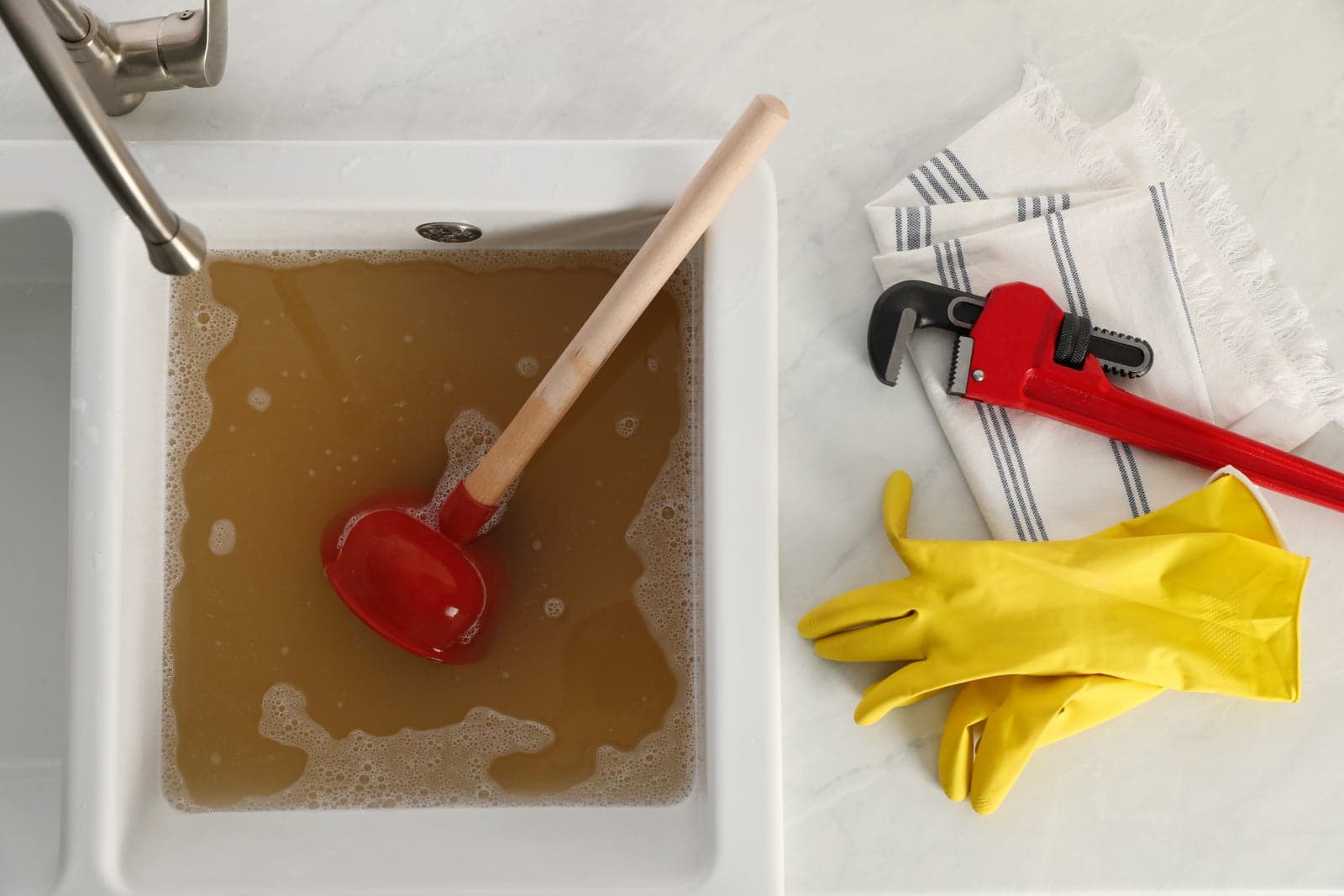
Key takeaway: A clogged drain may be caused by hair, soap, grease, food debris, or a deeper plumbing blockage. Minor clogs can often be addressed by removing visible debris, plunging the drain, or carefully clearing an accessible P-trap. Avoid mixing chemical drain cleaners or repeatedly using harsh products. If a clog keeps returning, affects multiple fixtures, causes wastewater backup, or does not clear with basic methods, professional drain cleaning can help identify and resolve the underlying issue.
On this page:
Before you try to remove a clog
How to unclog a drain
What to avoid when removing a drain clog
Why does my drain keep clogging?
When a clogged drain needs professional help
Keep your drains flowing with Horizon Services
Frequently asked questions
A clogged drain can quickly disrupt your daily routine, but many minor clogs can be cleared with a few simple steps. Hair, soap residue, grease, food particles, and other debris are common causes of slow or blocked drains. Before reaching for harsh chemical cleaners, try safer mechanical methods such as removing visible debris, plunging the drain, or clearing an accessible P-trap.
If a clog keeps returning, affects multiple drains, or causes water to back up, the problem may be deeper in your plumbing system. In these cases, professional drain cleaning and unclogging services across Delaware, Pennsylvania, New Jersey, and Maryland can help identify and clear the underlying blockage.
Before you try to remove a clog
Start by identifying which drain is affected and how severe the blockage appears to be. A slow bathroom sink may have a simple buildup of hair or soap, while several backed-up fixtures can indicate a problem farther down the plumbing system.
Keep these safety tips in mind:
Do not mix different drain-cleaning chemicals.
Never mix drain cleaners with bleach or other household chemicals.
Wear gloves and eye protection when handling drain debris.
Avoid forcing tools into a drain if you encounter significant resistance.
If you have already used a chemical drain cleaner, use caution before attempting mechanical removal.
For most minor clogs, mechanical methods are a better starting point than harsh chemical products.
Combining certain cleaning products can create toxic gases or violent chemical reactions. For more information on chemical safety, see the NFPA guide on the dangers of mixing household chemicals.
How to unclog a drain
1. Remove visible debris
Start with the simplest solution. Remove the drain cover or stopper and look for hair, soap buildup, food particles, or other debris near the opening.
Pull out what you can safely reach and clean the drain cover before replacing it. A drain strainer can also help prevent hair, food, and other debris from entering your pipes in the future.
2. Try hot water
Hot water can help loosen some soap, grease, and other buildup inside a drain. Slowly pour hot water down the drain and allow it to work through the pipe.
Avoid assuming boiling water is safe for every plumbing system or fixture. If you are unsure, use hot tap water instead.
3. Use a plunger
A plunger can create pressure that helps loosen a minor blockage.
For a sink or tub:
Add enough water to cover the plunger's cup.
Position the plunger directly over the drain opening.
Create a tight seal.
Push and pull the plunger firmly several times.
Remove the plunger and check whether the water begins draining normally.
Repeat as needed.
If the clog does not clear after several attempts, avoid repeatedly forcing the blockage deeper into the pipe.
4. Clear the P-trap
If a sink remains clogged, the blockage may be inside the P-trap, the curved section of pipe beneath the sink.
Place a bucket beneath the trap before carefully loosening the connections. Allow standing water and debris to drain into the bucket, then clean the trap and reinstall it securely. Run water slowly afterward to check for leaks.
Only attempt this if you are comfortable working with your plumbing. If the connections are difficult to remove or you are unsure how to reinstall the trap, contact a professional plumber.
5. Use a drain snake
A basic drain snake can help reach clogs that are farther inside the pipe. Feed the tool slowly into the drain and follow the manufacturer's instructions.
Avoid forcing the snake or using excessive pressure. If the blockage will not move, the clog may be too deep or may involve an underlying plumbing issue.
What to avoid when removing a drain clog
Chemical drain cleaners may seem convenient, but they are not always the best solution. Harsh chemicals can create safety hazards and may damage plumbing or fixtures if used improperly. Our plumbers recommend professional plumbing services over harsh chemical drain products for stubborn clogs.
Avoid:
Mixing drain-cleaning products.
Combining drain cleaners with other household chemicals.
Repeatedly pouring harsh chemicals into the same drain.
Using excessive force with a drain snake.
Ignoring a clog that keeps returning.
Continuing DIY attempts when wastewater begins backing up.
Why does my drain keep clogging?
Clearing a drain does not always address the reason the clog formed. Recurring blockages can result from continued buildup, damaged pipes, or an obstruction deeper in the plumbing system.
Common causes include:
Hair and soap buildup in bathroom drains
Grease and food particles in kitchen drains
Foreign objects
Mineral buildup
Damaged or deteriorating pipes
Tree root intrusion in some sewer lines
Blockages deeper within the drain or sewer line
If the same drain keeps slowing down after you clear it, professional drain services can help determine whether cleaning is enough or if the plumbing needs repair. Horizon uses methods such as drain snaking, hydro jetting, power rodding, and camera inspections based on the specific issue.
When a clogged drain needs professional help
A minor clog may be manageable at home, but some warning signs indicate a larger problem.
Contact a professional plumber if:
The clog will not clear with basic methods.
The same drain repeatedly becomes clogged.
Several drains are slow or backed up at the same time.
Water backs up when another fixture is running.
You notice sewage odors or wastewater.
A drain is completely blocked.
You suspect a damaged or leaking pipe.
Multiple affected fixtures can point to a blockage in the main drain line rather than an isolated fixture. Horizon's water and sewer services include solutions for main line issues, sewer blockages, and other problems that can affect drainage.
For severe clogs causing flooding, overflowing fixtures, or wastewater backup, Horizon also provides 24/7 emergency plumbing services.
Keep your drains flowing with Horizon Services
From minor drain clogs to more persistent plumbing problems, Horizon Services provides expert plumbing solutions for homeowners throughout Delaware (including Wilmington and Newark), Pennsylvania (including Chester and Montgomeryville), New Jersey (including Camden and Gloucester), and Maryland (including Baltimore and Bel Air). If a stubborn clog will not clear or keeps coming back, Horizon's plumbing services can help identify the issue and restore proper drainage.
Frequently asked questions
Can I unclog a drain without chemicals?
Yes. Removing visible debris, using a plunger, cleaning an accessible P-trap, or using a drain snake can clear many minor clogs without chemical cleaners.
Why does my drain keep clogging after I clear it?
Recurring clogs can indicate continued buildup, an obstruction deeper in the pipe, or damaged plumbing. If the same drain repeatedly becomes clogged, professional drain cleaning can help identify the underlying cause.
Is boiling water safe for clogged drains?
Hot water may help loosen certain types of buildup, but boiling water is not appropriate for every plumbing system or fixture. Use hot tap water if you are unsure about your plumbing materials.
What should I do if multiple drains are clogged?
Multiple clogged or slow drains can indicate a blockage farther down the plumbing system. Instead of treating each fixture individually, contact a professional plumber to evaluate the system.
When should I call a plumber for a clogged drain?
Call a plumber if the clog is severe, keeps returning, affects multiple fixtures, causes wastewater backup, or does not clear with basic removal methods.
Related Articles
What do you need help with today?
Heating
No heat, strange smells, rising bills? We repair and replace heating systems to keep your home reliably warm.
Air Conditioning
AC blowing warm air? Uneven cooling in your rooms? We fix cooling issues fast and keep your system running smoothly all summer.
Plumbing
Our highly trained plumbers handle it all, from leaky faucets to full system installations and repipes.
Electrical
The smartest team in town. You need repair, installations, wiring, inspections, lighting — you name it.